FutureSox 2026 Chicago White Sox Top 30 Prospect Update: May Edition
The minor league season is underway for the White Sox and has reached the one-month mark, giving us our first extended look at where the FutureSox 2026 preseason top 30 stands in their first live game action of the new year.
This is not a re-ranking. The order below remains unchanged from the preseason list, with this May update serving as a progress report on each player’s start to the season and what matters most moving forward.
The opening month has already brought meaningful movement throughout the system.
Noah Schultz has reached Chicago, with Sam Antonacci joining him as another preseason top-10 prospect to debut in the majors. Braden Montgomery earned a promotion to Charlotte after a strong start following his reassignment to Birmingham, while Caleb Bonemer has continued pushing toward the top tier of national prospect lists.
Bonemer has continued to look like a hitter pushing toward Birmingham, while 2025 sixth-round pick Colby Shelton has already earned that move after helping lead a mashing Winston-Salem lineup. Billy Carlson and Jaden Fauske, the top two picks from last year’s draft, have also shown encouraging signs while making the early adjustment to pro ball in Kannapolis.
A couple of injuries have adjusted projected timelines, including Tanner McDougal and William Bergolla Jr. Others are still settling into new levels or going through the normal ups and downs that come with stronger competition.
Even with that, the first month has been encouraging. The system has already produced meaningful help for Chicago, with early arrivals looking more like real contributors than the fringe roster depth that has often filled gaps in recent years. Even in a loud offensive environment across the minors, several starts have been backed by adjustments and promotion-worthy production, giving younger players a chance to raise their stock heading into the summer.
The early picture has also created a clear split in the system. Several bats have pushed into promotion territory or strengthened their standing, while the pitching side has been marked by more volatility. That contrast adds useful context to the unchanged order and helps frame which early developments could still matter over the next few months.
Below is a player-by-player look at the current top 30, with a quick update on how each prospect has started and what to watch as the season moves toward the mid‑season list after the draft.
1. Noah Schultz, LHP (MLB)
Schultz has already reached Chicago after opening the season with a dominant run in Triple-A, checking the biggest box from his preseason outlook. His first five major league starts have shown both the upside and the remaining refinement points. The 6-foot-10 left-hander has flashed the look of a long-term rotation piece, highlighted by a six-inning, eight-strikeout start against Washington and six scoreless innings against San Diego.
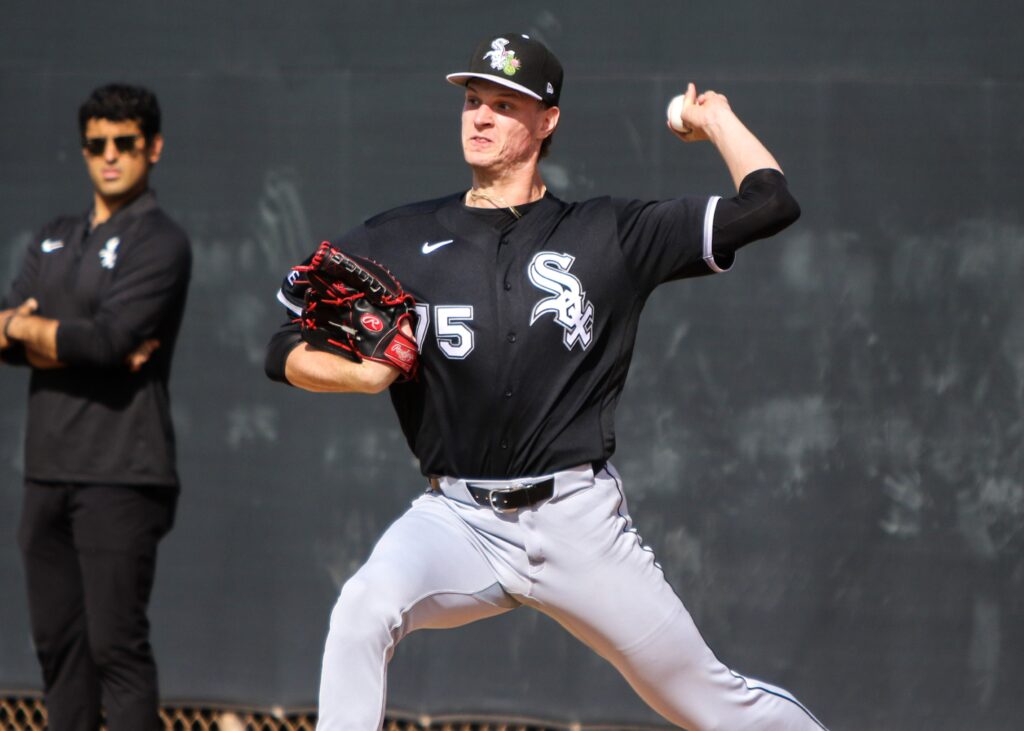
He also ran into his first real trouble in Anaheim, where command and fastball execution got away from him. Through 25 innings, Schultz owns a 4.68 ERA with 23 strikeouts, a .191 expected batting average, and a strong fastball foundation, but the 15.1% walk rate remains the next hurdle.
The arsenal is already evolving at the major league level, with the sinker, four-seamer, sweeper, cutter, and changeup all giving him different ways to attack hitters. The early takeaway is still positive. Schultz is no longer just knocking on the door, and the White Sox now have one of their highest-upside arms learning in the big league rotation.
2. Caleb Bonemer, SS (A+)
A strong full-season debut already had Bonemer near the top of the system, and his first month at Winston-Salem has only strengthened that standing. The 20-year-old is hitting .271/.412/.686 with 13 home runs and a 173 wRC+ through 32 games, with added strength from the offseason showing up in a louder pull-side power profile. He has already exceeded last year’s home run total in a fraction of the games, won White Sox Minor League Player of the Month, and homered off Gerrit Cole (and was later thrown at) during a rehab start.
The power surge has come without a major swing overhaul, as Bonemer has focused on keeping things simple while letting the added physicality turn more hard contact into damage. Pitchers have started treating him as the main threat in the lineup, which has led to more careful sequencing and spin, resulting in a recent uptick in strikeouts. That does not change the breakout, but it does make his next step clear. His push to Birmingham will come down to tightening the strikeout rate and continuing to settle into his defensive home between shortstop and third base. Elijah Evans sat down with Caleb Bonemer earlier this week.
3. Braden Montgomery, OF (AAA)
A short return to Birmingham gave Montgomery enough time to answer what the White Sox wanted to see. The switch-hitting outfielder hit .310/.423/.575 in April, earned Southern League Player of the Month honors, and pushed his way to Charlotte by early May. His first week in Charlotte has been quieter than the Birmingham run, but he has still held his own at the level and already produced a multi-hit game with two doubles.

The power is still the carrying tool, but the more encouraging part is how he has paired it with improved swing decisions and damage from both sides of the plate. There is still some in-zone swing-and-miss to tighten before Chicago becomes the next step, but Montgomery’s contact quality and preparation give him a real chance to force that conversation this summer.
4. Hagen Smith, LHP (AAA)
The surface line does not fully capture Smith’s first month, but the overall direction still points toward Chicago. The left-hander was named White Sox Minor League Pitcher of the Month after posting a 2.20 ERA in April with 25 strikeouts in 16.1 innings, holding Triple-A hitters to a .158 average. His season ERA has since climbed to 4.10 after a rough May 9 outing, but the bat-missing ability has remained intact with 35 strikeouts over 26.1 innings. The bigger conversation is workload. Smith has mostly been kept in shorter starts by design, with the organization clearly managing his pitch count and innings for later in the season. That has raised fair questions about when the White Sox will let him work toward a more traditional starter’s role.
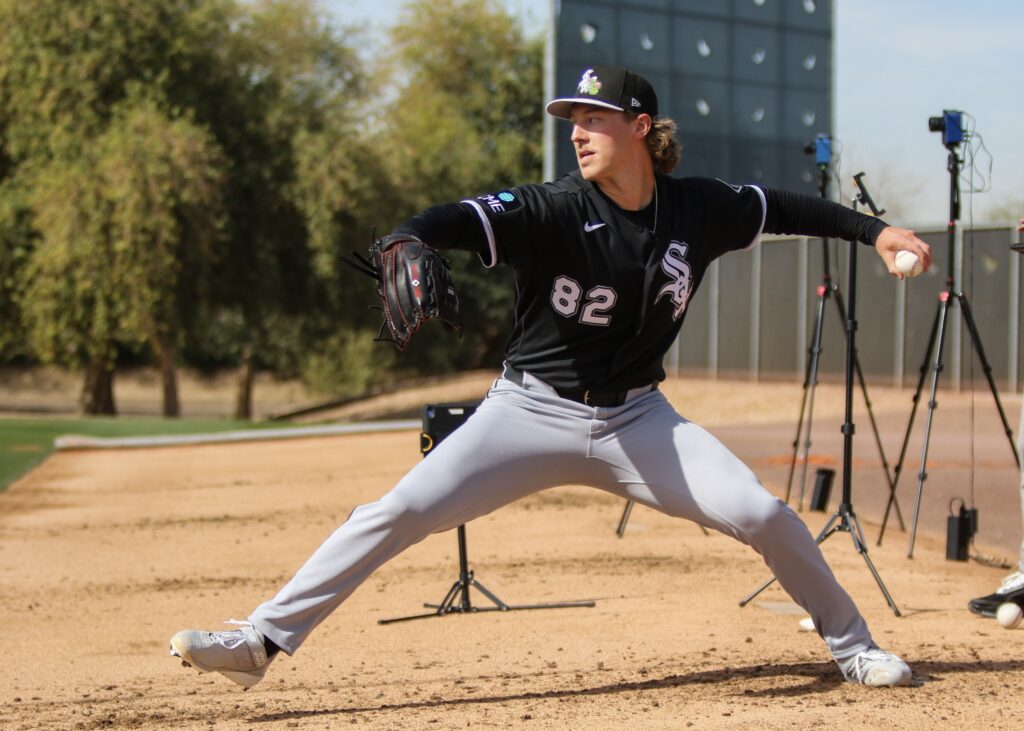
The stuff still looks like a major league fit, especially with the fastball-slider foundation and a cutter now part of the mix. The command has not disappeared start to start, but individual innings have gotten away from him, which keeps consistency from being what keeps him between Triple-A success and a Chicago look. If the organization starts stretching him out and the strike-throwing steadies, Smith should be one of the next arms in line.
5. Tanner McDougal, RHP (AAA/IL)
McDougal was one of the closest arms to Chicago before his season hit a concerning pause in Charlotte. The right-hander opened the year with a 3.00 ERA, 27 strikeouts, and a 1.04 WHIP over 24 innings, holding opponents to a .150 average while showing the power stuff that pushed him near the back of national top 100 lists. His last two starts were both cut short, first by hamstring tightness and then by right forearm tightness, later reported as a flexor strain.
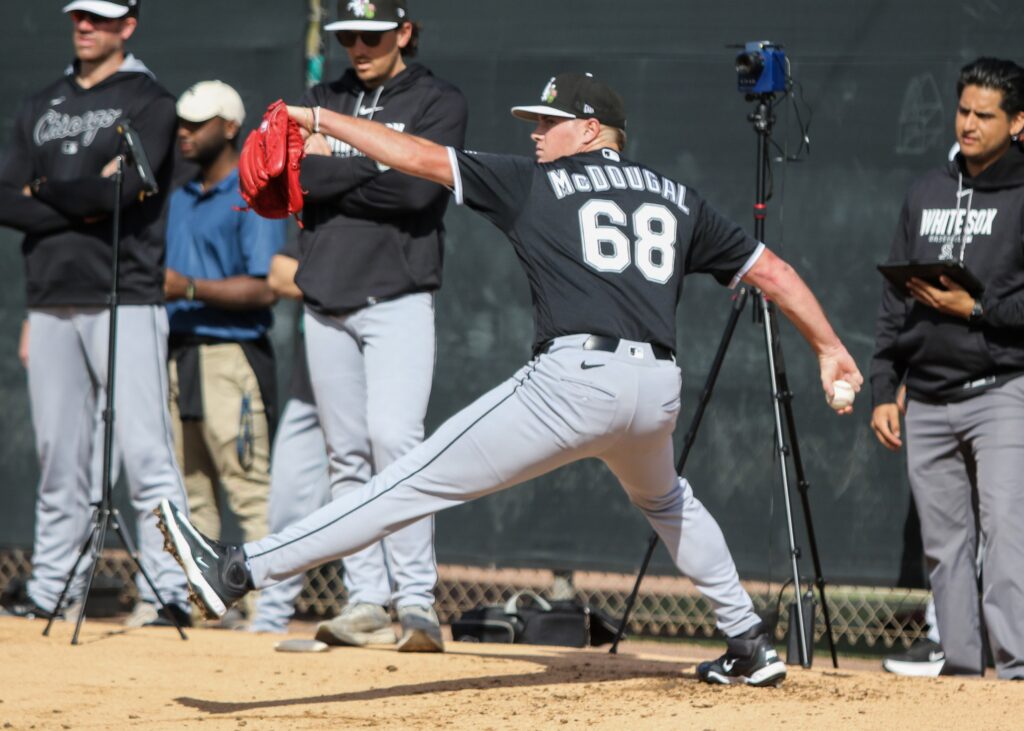
He landed on the 7-day IL and was shut down from throwing for a couple of weeks to open May. Given his Tommy John history, the injury carries obvious concern, but the early performance still reinforced why he was viewed as the system’s top right-handed pitching prospect entering the season. If the shutdown is brief and he resumes throwing without issue, McDougal could still reenter the major league pitching picture later this summer.
6. Christian Oppor, LHP (AA)
The Double-A jump has been a rough adjustment for Oppor, whose command has backed up after a breakout 2025 across both A-ball levels. The 21-year-old owns a 9.16 ERA through six starts with more walks than strikeouts, and his latest outing showed how quickly things can unravel when he loses the zone. Hitters have not punished Oppor the way the ERA suggests, with a .221 average against and a .236 BABIP, pointing more toward self-inflicted damage than a lack of stuff.
The underlying ingredients are still easy to dream on. Oppor still looks the part of a loose, athletic left-hander with starter traits, but the delivery has not synced up enough for the stuff to play consistently. The next step is to get back to better counts and let the arsenal work from the driver’s seat, rather than pitching through traffic.
7. Billy Carlson, SS (A)
A month into his first full-season assignment, Carlson has looked more comfortable at the plate than some evaluators expected coming out of the draft. The 2025 first-rounder has reached base in 24 of his first 29 games for Kannapolis, giving the offensive profile a solid early foundation while the White Sox continue working to simplify the swing. The impact has not fully arrived yet, and that will be the next layer to watch as he adds strength and settles into pro pitching.
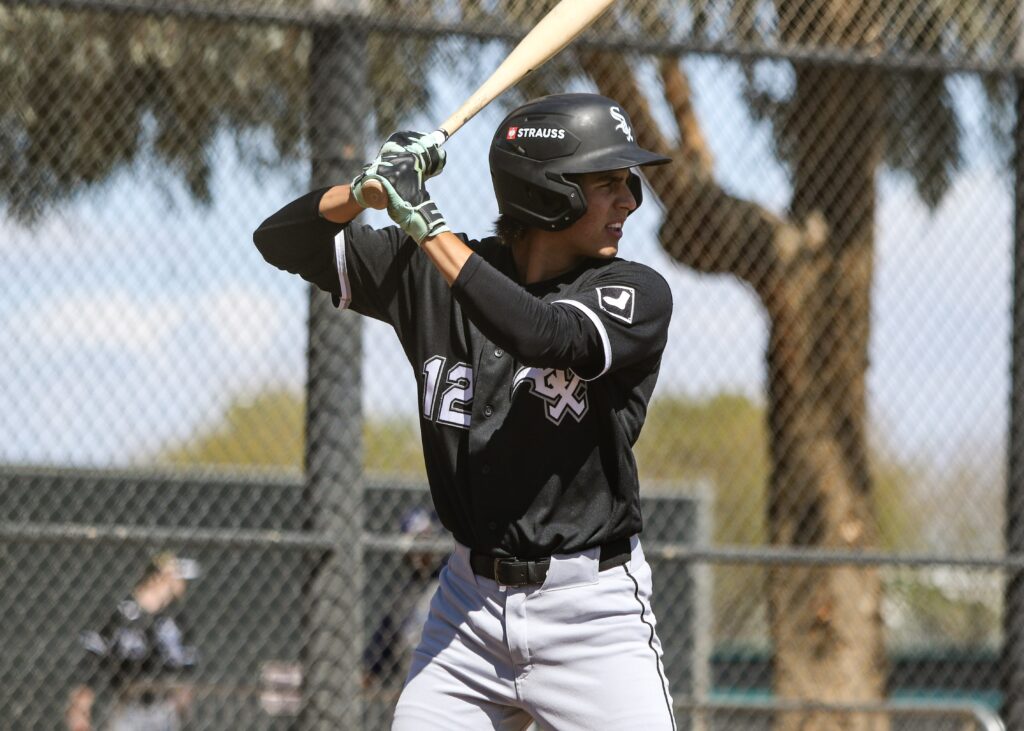
The glove has been as advertised and remains the carrying trait. That defensive foundation is why some evaluators viewed him as one of the best prep shortstop defenders in recent memory, and it gives the profile a high floor if the bat settles in. The bat does not need to become loud for the profile to work, but more authority on contact would quickly change how aggressively he is viewed, because the defensive value already carries substantial weight.
8. Jaden Fauske, OF (A)
The early line is not as loud as some of the other hitters in the system, but Fauske has shown plenty of encouraging traits in his first full-season look. The 2025 second-rounder is hitting .245/.398/.373 with a 117 wRC+ through 28 games, and the plate discipline has translated quickly for a 19-year-old facing professional pitching. There is still some swing-and-miss to clean up, and the approach can lean more patient than aggressive at times, but that is part of the development curve for a young hitter learning which pitches he can drive.
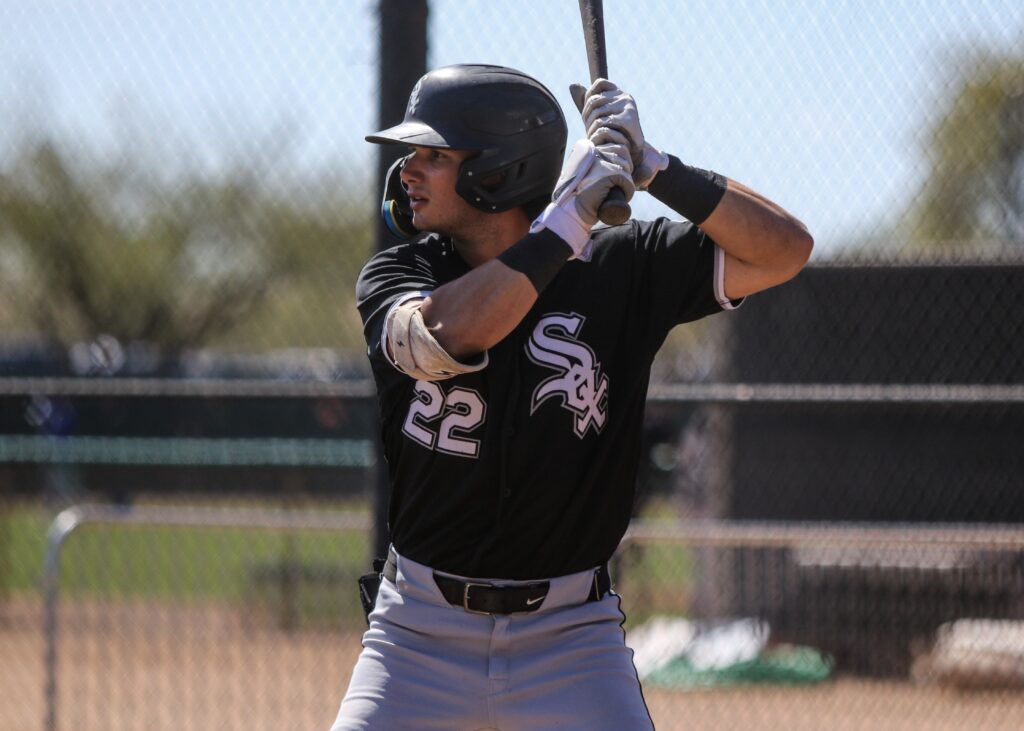
The athleticism has already played, with Fauske adding value on the bases while continuing his transition from catcher to the outfield. If the contact rate tightens and the power starts showing up more often, the overall profile could move quickly because the frame and athleticism are already in place. For a deeper look at Fauske’s start, check out this piece at Just Baseball on three 2025 prep bats off to strong starts in full-season ball.
9. Sam Antonacci, UTL (MLB)
A short stay in Charlotte quickly turned into a major league opportunity for Antonacci, who has become a needed answer for the White Sox in both left field and the leadoff spot. The 23-year-old is hitting .268/.376/.394 through his first 87 plate appearances, with a 122 wRC+ overall and an even stronger .309 average, .400 OBP, and 146 wRC+ since April 21.
The Statcast foundation backs up the quality of the at-bats, with a .311 xBA, .391 xwOBA, and elite marks in strikeout, whiff, and chase rates. The long-term defensive fit may still trend back toward the dirt, but his ability to control the zone and put the ball in play while creating value on the bases should keep him in Chicago. It is the exact type of professional offensive profile the White Sox needed to see translate.
10. David Sandlin, RHP (AAA)
A delayed start kept Sandlin from building momentum out of camp, but his first few outings since joining the White Sox organization have been encouraging. The right-hander opened on a rehab assignment with Winston-Salem before joining Charlotte, and he has yet to allow an earned run through 10.1 innings while striking out 14. The workload is still being managed after elbow soreness and a back issue slowed him in the spring, but the power profile remains intact.
Four innings appears to be the current cap as he builds back up, and his second Charlotte outing showed the command is still catching up after the delayed spring. Sandlin gives the system another upper-level arm with mid-to-upper-90s velocity and a starter’s frame, though the command will determine whether he sticks in that role long term. If he stays healthy and continues to gather innings at Charlotte, the White Sox could have another rotation or multi-inning depth option to consider later this season.
11. William Bergolla Jr., SS (AAA/IL)
Bergolla has not played since April 9 after a collision with Sam Antonacci in Charlotte led to a shin injury that has proven more stubborn than expected. The timing was unfortunate, as the 21-year-old opened the year with a 188 wRC+ through 10 games, which still stands as the third-best mark in the International League among hitters with at least 40 plate appearances. It was a strong reminder of what makes his profile interesting. Bergolla does not need power to impact the game when he is putting the ball in play at an elite rate and moving around the infield, which creates pressure with his playing style.
Chris Getz recently said Bergolla is still rehabbing and “hasn’t really been able to get over the hump,” while pointing to the same contact ability and all-around game that could eventually fit in Chicago. Once healthy, Bergolla still has a realistic path to the majors, but the first step is to get him back on the field and let the early momentum resume.
12. Javier Mogollon, INF (A)
The early-season camp buzz has carried into games for Mogollon, who has been one of Kannapolis’ most productive bats through the first month. The 20-year-old is hitting .278/.417/.489 with a 143 wRC+ through 26 games, pairing his usual loud contact with a more controlled offensive approach. His swing rate is down from last season, while the on-base gains and improved damage suggest he is getting into better counts rather than selling out for power.
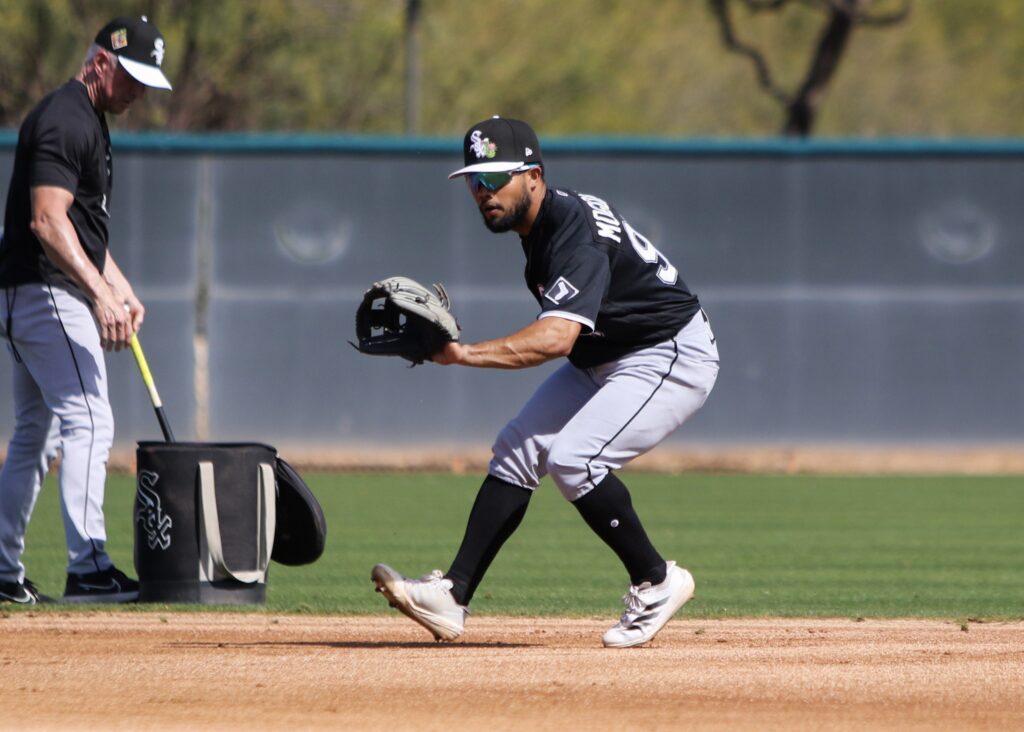
The .407 BABIP may be doing some lifting. Because he is repeating Kannapolis after an injury-shortened finish last year, this kind of start could put Winston-Salem in play if the approach holds. If Mogollon can tap back into the double-digit home run power he showed in the DSL while keeping the speed and on-base skill intact, there is a compact second-base profile with strong offensive upside.
13. Mason Adams, RHP (ACL/IL)
Adams has returned to the ACL on a rehab assignment after missing the 2025 season following Tommy John surgery. The injury paused what looked like a realistic path to Chicago after his strong 2024 season backed up the breakout he had built the year before. Adams does not fit the pure power-arm mold, but that has always been part of the appeal. He succeeds by changing speeds, locating multiple pitches, and keeping hitters from sitting on one look.
That type of profile gives him less margin coming off surgery, which makes his velocity and feel especially important as he ramps back up. Early reports from Arizona have been encouraging, with his bullpens showing positive signs and the feel still present. The White Sox have found value with later-round arms in recent years, and Adams should not be forgotten in that group. If he gets back to his pre-injury form, he can reenter the picture as back-end rotation depth or a multi-inning option for Charlotte and Chicago.
14. George Wolkow, OF (A+)
The first month at Winston-Salem has shown the usual extremes in Wolkow’s profile. The raw power is still obvious, with four home runs already and a pull rate around 50 percent, but the jump to High-A has also exposed the swing-and-miss risk. His strikeout rate has climbed with the level, and the contact rate is down from last season, which has kept the overall line muted despite the flashes of impact.
The encouraging piece is that the walk rate has held near 10 percent, so the approach has not completely backed up while he works through the adjustment. Wolkow remains one of the highest-upside bats in the system because the damage potential is different when he gets to the ball. The last couple of series were a reminder of how thin the margin can get when the contact disappears. The ceiling is still tied to rare raw power, but the next step is to get to it more often against High-A pitching.
15. Kyle Lodise, SS (A+)
It has been a strange but useful evaluation window for Lodise. The batting average has not come with him yet, but the 2025 third-round pick has still found a way to be productive at Winston-Salem with a .398 OBP and 114 wRC+. His 27.5% swing rate and 5.7% swinging-strike rate point to a hitter trying to work deeper counts rather than expand early, and the approach has produced a walk rate (24.8%) more than 10 percentage points higher than his post-draft debut.
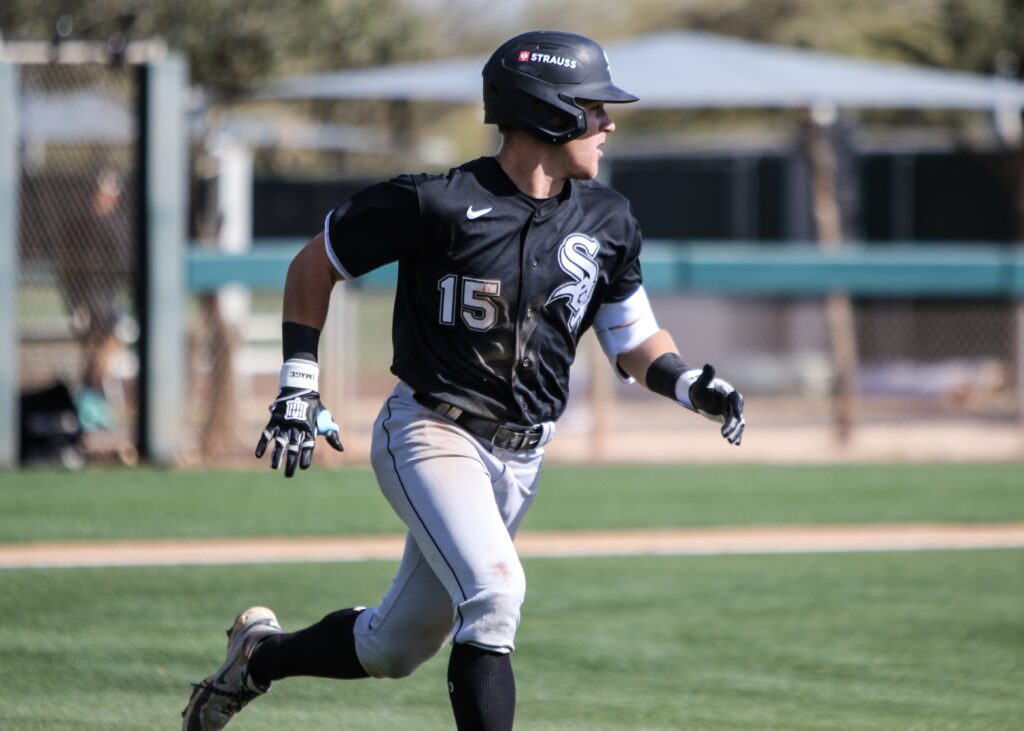
That selectivity has kept the on-base value intact, though it has also limited how often he strings together hits, with only one multi-hit game so far. Lodise has moved around the infield and shown enough feel for the zone to keep at-bats alive. His home run off Gerrit Cole was a reminder that there is more impact in there if he starts attacking more pitches he can drive.
16. Mathias LaCombe, RHP (ACL/IL)
LaCombe has started to turn the corner after a delayed opening to the season, making his 2026 debut in the Arizona Complex League with a scoreless inning and a fastball that touched 97 mph.
The French right-hander was expected to be part of the Winston-Salem rotation, and that still appears to be the likely destination once the White Sox are ready to move him out of Arizona. The appeal remains easy to see. LaCombe brings carry and arm-side life from a lower slot, with a sweeping slider and splitter giving him multiple ways to miss bats.
17. Jeral Perez, INF (AA)
The Double-A jump has been a bumpy but understandable adjustment for Perez after spending all of last season in High-A. Birmingham is a difficult-hitting environment, and the 21-year-old has still shown flashes of the pull-side power that carried his profile in 2025. The overall line has lagged, with a .180/.278/.279 slash and a 57 wRC+ through 29 games, but the bigger issue is that the impact has not shown up often enough to offset the empty at-bats.
Perez has also split time between second and third base, where the defense has been uneven with five errors so far. The last couple of series have made the adjustment look more pressing, and his bat will have to carry more often for the profile to regain traction this summer.
18. Blake Larson, LHP (ACL)
Larson has not yet pitched in an official ACL game, though he has logged innings in extended spring training as the White Sox continue working him back from Tommy John surgery. After missing all of last season, this stage is about rebuilding his innings base and getting him back into a normal game rhythm before the results carry much weight.

When healthy, Larson gives hitters an uncomfortable look from a low release, with mid-90s velocity and a high-spin breaking ball that can play off that angle. His ACL debut will be the first step toward a potential Low-A assignment later in the year.
19. Landon Hodge, C (ACL)
Hodge did not appear in an official ACL game through the first week of the season, but that was not overly concerning for a prep catcher whose development will move more slowly by nature of the position. The 2025 fourth-round pick made his debut Monday night in an 11-6 win over the Mariners and made a quick impression.
He singled home a run, worked a walk, and scored on a double before Jose Mendoza replaced him behind the plate in the sixth. Hodge fits the organizational preference for up-the-middle athletes, with a left-handed bat and defensive traits that give him a strong foundation at catcher. The early setup in Arizona should be interesting, as Hodge and Mendoza give the ACL club a dynamic split behind the plate while both get more exposure to pro arms.
20. Aldrin Batista, RHP (A+/IL)
Batista’s timeline remains unclear after the Dash placed him on the 60-day IL to open the season. The right-hander lost most of last year to a stress fracture in his throwing elbow, and his current absence appears tied to that same area after a difficult return late in 2025.
He’s shown starter traits with a deceptive low-slot look, a mid-90s sinker, and a quality changeup that helps the arsenal play against left-handed hitters. The missed time creates some uncertainty with a 40-man decision looming after the season, which could eventually push him toward a multi-inning relief role.
21. Shane Murphy, LHP (AAA)
A solid return to Birmingham earned Murphy another look with Charlotte after a first taste of Triple-A last season. The left-hander opened the year by giving the Barons steady innings, then moved back to the Knights rotation and has completed five frames in each of his first two starts there.
The results have been mixed at the level so far, with three and four runs allowed in those outings. If he settles in at Charlotte, he can stay in the conversation as left-handed depth for Chicago later in the year in a Tyler Schweitzer-type role.
22. Juan Carela, RHP (ACL/IL)
Carela is nearing the final stretch of his Tommy John recovery after losing the entire 2025 season to elbow surgery. The right-hander was briefly removed from the 40-man roster after the injury, then returned to the organization on a minor league deal to continue his rehab. He was activated last November before the ACL White Sox placed him on the 7-day IL to open May.
Before the layoff, Carela had built his case on strike-throwing and a slider that played well against right-handed hitters across High-A and Double-A. Given the missed time and his age, the clearest path back may be a multi-inning relief role rather than a full return to the starting rotation. His first game action around mid‑season should offer a better read on how the stuff has returned and where he fits moving forward.
23. Gabe Davis, RHP (A+)
A towering 6-foot-9 right-hander, Davis has been one of the more encouraging early pitching developments in Winston-Salem. The 2025 fifth-rounder has worked in shorter starts while building his innings base, but the stuff has already translated. Through six outings, he owns a 1.80 ERA with 25 strikeouts in 20 innings, including back-to-back May starts with nine and seven strikeouts once the leash was stretched to four frames to open the month.
That is a strong early sign for a pitcher who spent most of his college career in relief and entered pro ball with questions about strike-throwing and durability. The White Sox have found value in the fifth round in recent years, and Davis gives them another power arm to develop if the delivery keeps syncing up. He should get time to settle in at Winston-Salem, but the first two four-inning looks suggest he is handling each workload bump well. If that continues, five-inning outings could come into play by the second half.
24. Ely Brown, OF (A+)
A jump to Winston-Salem has tested Brown’s contact-first profile, but the approach still gives him a path to value. The left-handed hitter is batting .224/.376/.276 through 27 games, with an 18.3% walk rate helping keep the offensive line afloat while the overall impact remains limited.
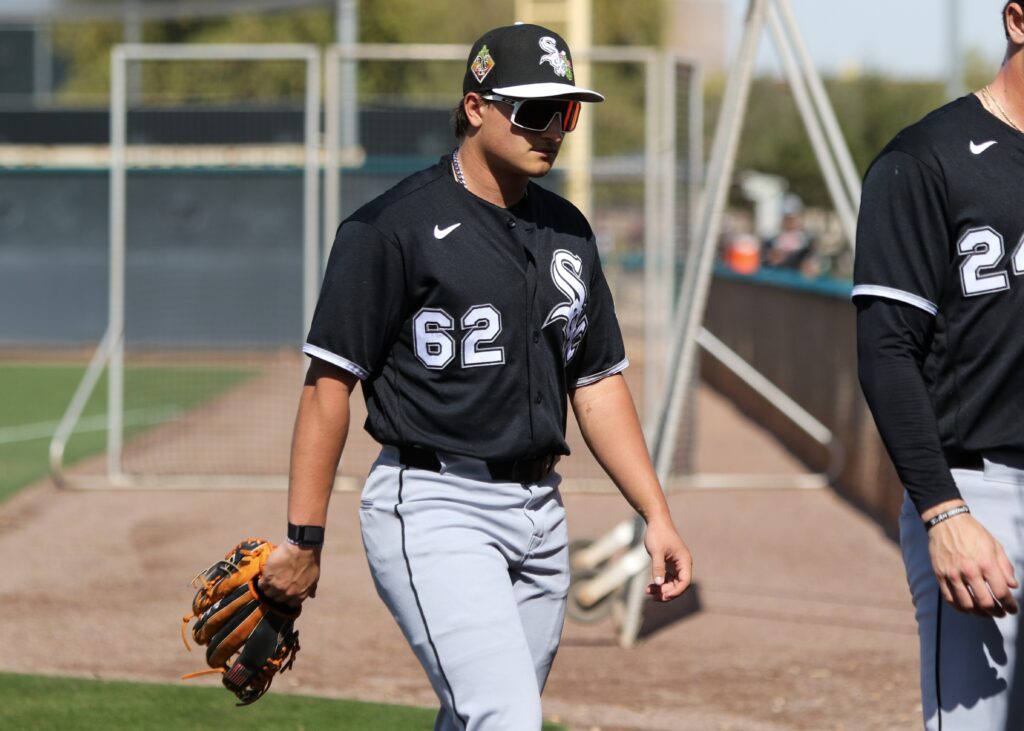
There are some signs that he is trying to create more impact, with more pull-side contact and fewer balls on the ground compared to last season. Brown still fits as an on-base and speed-oriented outfielder who can handle center field, but the next layer is turning more of that contact into gap damage. If that happens, he remains one of the better under-the-radar prospects in the system.
25. Samuel Zavala, OF (AA)
A strong first month in Birmingham has put Zavala back into the conversation as one of the more interesting outfielders in the system. The 21-year-old is hitting .248/.385/.413 with a 120 wRC+ through 32 games, and the power has started to show up in a difficult environment for hitters. His five home runs are already more than half of last year’s total, while his 17.6% walk rate shows the approach has held up against Double-A pitching.
That is the encouraging part for a hitter whose patience has always been one of his better traits. Zavala is still young for the level and has continued to handle time across every outfield spot. The last couple of series have cooled some of the early momentum, but the walk rate has held, and the broader first month still looks like a step forward. The swing will still need to keep proving itself against better velocity, but this start is a reminder of why he was a notable piece of the Dylan Cease trade.
26. Jose Mendoza, C (ACL)
The early ACL sample is limited to one game for Mendoza, but he made it count with a grand slam in his stateside debut. It was a quick reminder of the all-fields strength that drew praise on the back fields this spring.
The 18-year-old catcher already has one of the better defensive reputations in the lower levels of the system, and his 6-foot-3 frame gives the White Sox plenty of physical projection to work with. Mendoza is still early in his development, but the combination of defensive ability and right-handed impact makes him a name to keep an eye on.
27. Matthew Boughton, UTL (A)
An earlier-than-expected move to Kannapolis has made Boughton a more interesting follow than a typical late-round prep pick in his first pro spring. The 2025 11th-rounder showed some backfield flare with a home run in extended spring training, then reached full-season ball and has already added another homer with the Cannon Ballers.
The offensive line is still light at .210/.239/.323 through 16 games, and a low BABIP has not helped, but this is more about exposure and development than immediate production. Boughton gives the White Sox a flexible foundation. The next step is to add strength and turn more at-bats into competitive contact, but the early assignment suggests the organization wanted to challenge the tools sooner than expected.
28. Yobal Rodriguez, RHP (ACL)
Rodriguez is now on the full-season IL after undergoing Tommy John surgery, delaying what could have been his first stateside look with the ACL White Sox. The 18-year-old right-hander remains a long-term development arm, but his DSL debut gave the organization something to work with.
He opened his career with 18.2 straight scoreless innings and showed early feel for missing bats despite a limited workload. The fastball had already reached the low 90s, while the changeup looked like the most advanced part of the mix. The injury pushes the timeline back, making 2026 more about rehab.
29. Colby Shelton, INF (AA)
One month changed the entire tone around Shelton’s profile. After a quiet introduction to pro ball last summer, the 2025 sixth-rounder looked much closer to the SEC bat the White Sox drafted and earned a promotion to Birmingham alongside fellow 2025 draftee, 7th-rounder Anthony DePino. Shelton hit .339/.464/.661 and tapped into his strength with seven home runs and a 185 wRC+ at Winston-Salem, walking almost as often as he struck out while helping lead one of the loudest lineups in High-A.
The power has returned in a meaningful way, but the more important development is that it has come with better swing decisions and enough contact to support the production. His April was strong enough to earn league Player of the Month honors, and even as the batting average cooled late in his High-A run, the walks and extra-base damage kept the production intact. The promotion gives Shelton an age-appropriate challenge and a chance to prove the offensive adjustments can hold against better pitching. If they do, he becomes one of the bigger stock-up stories in the system.
30. Luis Reyes, RHP (A/IL)
Reyes, currently on the full-season IL, moves onto a longer recovery track after lat surgery. Last season, he logged 87 innings in Low-A, giving the organization a clearer look at his starter profile before the injury.
The delivery is low-effort, with extension and fastball velocity in the upper 90s. Command was the primary developmental focus before the setback. The immediate priority is health, with the next step being clearance to resume throwing.