
2026 MLB Draft Profile: Jacob Lombard
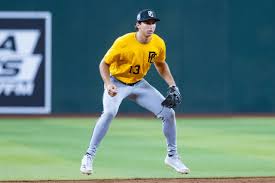
NAME: Jacob Lombard
SCHOOL: Gulliver Prep
POSITION: Shortstop
HEIGHT/WEIGHT: 6-3, 185
B/T: R/R
D.O.B: 9/27/2007
COMMITMENT: Miami
PREVIOUSLY DRAFTED: N/A
Scouting Report
Jacob Lombard is one of the most talented high school players in the 2026 MLB Draft class and one of the more difficult evaluations near the top of the board.
The Gulliver Prep shortstop is the younger brother of George Lombard Jr., who was selected by the Yankees in the first round of the 2023 draft. His father, George Lombard, was a second-round pick in 1994, played six seasons in the majors and is currently the Tigers’ bench coach. Jacob has grown up around the game and has been on the showcase circuit since junior high. Baseball America also noted that he was a high-level high school soccer player who helped Gulliver Prep win multiple state championships.
That soccer background is easy to see at shortstop. Lombard plays with light feet and controlled actions, allowing him to stay balanced without rushing plays on the dirt. The family background shows less in the name value than in the defensive instincts. He plays the position with a pace and internal clock that are rare for a high school player.
Lombard is listed at 6-foot-3 and 185 pounds, though some outlets have him closer to 195. He has added strength over the past year without losing the athleticism that drives his profile. The tools are why he is projected to come off the board early.
The arm is the one defensive tool with more variance in public evaluations. MLB Pipeline and Over Slot both grade it as a 50, while Baseball America wrote that some scouts project it as another future plus tool. Over Slot also noted that Lombard moved around the diamond with Team USA’s 18U group, which reinforces the athletic foundation if he ever has to shift off shortstop. The preferred outcome remains at the six.
Lombard is also one of the better runners in the class. Baseball America credited him with 70-grade run times, including a 6.46-second 60-yard dash at East Coast Pro. Over Slot noted sub-4.15 home-to-first times and 60-yard dash times in the 6.30 range at regulated events. MLB Pipeline gives him a 65 run grade.
Hitting from the right side with quick hands and a swing geared to lift the baseball. Lombard can drive the ball to both gaps and already shows big exit velocities. Over Slot grades his power as a 70. MLB Pipeline gives him a 60. Baseball America wrote that he has 25-30 home run upside if the contact gets to a playable level.
MLB Pipeline has also framed Jacob as a more physical version of George Lombard Jr. at the same stage. George was projected as a possible 20-20 player entering his draft. Jacob was described as having 30-30 upside.
The hit tool is the question that will define his draft slot. Lombard has shown patience and does not chase at an out-of-control rate, but the swing-and-miss data is difficult to ignore. In his Baseball America scouting feature, Carlos Collazo reported that Lombard swung and missed at a 38% clip in 30 Synergy-logged games in 2024 and a 39% clip in 32 Synergy-logged games in 2025. On a later BA draft podcast, Collazo added broader context, noting that Lombard’s overall high school Synergy miss rate was 32% across 1,266 pitches. That tied for the second-worst mark among top-15 high school hitters in a 23-player sample dating back to 2021.
Over Slot’s summer sample told a similar story. Across nearly 40 games and roughly 120 plate appearances, Lombard hit .247/.422/.326 with a couple homers and plenty of walks. The overall whiff rate was 41% while the in-zone whiff rate was 28%. When he expanded, the swing-and-miss became more severe. Over Slot noted a 66% whiff rate on pitches outside the zone and a 95.3% whiff rate on sliders off the plate.
The contact risk comes from how often the barrel arrives on time against better fastballs and spin. Lombard has enough approach and athleticism to project improvement, but the swing can lose adjustability when the load gets too tall or the front side leaks open. The bat speed is easy to see and the shape of the swing still gives teams something to buy. The miss rates are what make him a more complicated bet this high in the draft.
Lombard helped himself this spring. Baseball America wrote that he had his best season at Gulliver Prep and that scouts were generally positive about the swing and his performance against South Florida pitching. That does not erase the showcase data, but it gives teams a reason to believe there has been progress.
Public boards reflect the split. Baseball America lists Lombard as a five-star recruit and the No. 2 high school player in the class. Just Baseball ranked him No. 6 among prep prospects. MLB Pipeline has him No. 4 on its draft board with a 60 overall grade. The Athletic ranked him No. 17, with the swing-and-miss questions carrying more weight.
The gap between those rankings captures the evaluation. Sources that lean on the athleticism and defensive home see a top-five talent. Sources that weigh the contact data more heavily are less comfortable.
Lombard’s draft case is easy to see but difficult to price. If the contact gets to an acceptable level, the rest of the profile can carry him near the top of the class. If the swing-and-miss follows him into pro ball, he becomes a much harder sell with the first overall pick.
Why Would The White Sox Draft Jacob Lombard?
The White Sox hold the No. 1 overall pick and have been connected most often to Roch Cholowsky, Grady Emerson, Vahn Lackey and Lombard in public draft coverage.
Lombard would be the ceiling play from that group. Cholowsky offers the safest college track record with shortstop value. Emerson is the polished prep bat with the most confidence in the hit tool. Lackey is an athletic college catcher coming off a huge junior season. Lombard carries more offensive risk than all three, but his best version gives the White Sox a different type of player to consider.
The argument for Lombard over Emerson starts with the rest of the tool set. In a Baseball America mailbag discussion, Ben Badler said Lombard is the better athlete, better defensive shortstop, faster runner and more powerful hitter. Carlos Collazo agreed that Lombard has a chance for plus-or-better tools across the board outside of hitting ability.
Lombard gives the White Sox the louder athletic bet, while Emerson offers more certainty in the batter’s box. If Chicago is weighing both prep shortstops at No. 1, that difference is the heart of the decision.
Evaluators have more confidence in Emerson’s bat-to-ball skill and strike-zone judgment. Badler said Emerson has a chance to be a plus-plus hitter with enough future strength to grow into 20-25 home run power. The White Sox would have to believe Lombard can close enough of that hit-tool gap.
The organizational fit is easy to see. Chris Getz has emphasized up-the-middle players, and the White Sox have valued shortstops in recent drafts. Under Mike Shirley, the club has used first-round picks on three left-handed pitchers and three shortstops. Lombard would continue that trend while giving the system a louder prep athlete than the safer options at the top of the board.
He would not be the conventional choice at No. 1. MLB Pipeline’s industry poll had 15 evaluators predicting Cholowsky to the White Sox, three picking Emerson, two picking Lombard and one picking Lackey. That puts Lombard in the mix without making him the favorite.
If Lombard’s bonus demand came in below the other top options, that could change the shape of Chicago’s draft. Savings at No. 1 could help the White Sox chase a top-20 talent who they could slide to No. 41 or take multiple overslot shots on Day 1. That cannot be the whole argument, though. The pick only works if Chicago believes Lombard’s contact gains are real.
The White Sox could justify him if they view the spring gains as a meaningful step forward. They would also need to trust their hitting group to help him make more contact without taking away the explosiveness that makes him different. A shortstop with plus speed and 25-plus homer ability is rare. The profile only works at No. 1 if Chicago is comfortable projecting the bat.
Mock Draft Outcomes
Lombard’s public range starts with the White Sox as a dark-horse option at No. 1 and becomes much more realistic a few picks later. In Mock Draft 1.0 from James Fox here at FutureSox, he projected Lombard to the Kansas City Royals with the #6 overall pick.
MLB Pipeline called Lombard a dark-horse candidate for the White Sox at No. 1 and wrote that he may be the favorite to go No. 4 to the Giants. Pipeline also compared him with George Lombard Jr. and noted that Jacob is more physical at the same stage, with more raw power and speed.
Over Slot has consistently connected Lombard to San Francisco. Joe Doyle projected him to the Giants at No. 4 in both Mock Draft 2.0 and Mock Draft 3.0, noting that the Giants had done significant background work on Lombard. In Mock Draft 1.0, Over Slot had Lombard going No. 9 to Atlanta while noting that his up-and-down summer left questions for the spring.
Taylor Blake Ward of The Sports Tribune also projected Lombard to the Giants at No. 4. That report framed Lombard and Eric Booth Jr. as the leading prep candidates for San Francisco, with Lombard carrying more industry consensus as a priority at that pick.
The Athletic’s latest mock connected Lombard most heavily to Kansas City at No. 6, while also mentioning Eric Booth Jr. and pitching as fallback options for the Royals. Keith Law’s board is more cautious than most on Lombard, ranking him No. 17 despite the top-of-the-class tools.
Just Baseball’s latest mock pushed Lombard a little further down the board, projecting him to Oakland at No. 8. That outcome would still keep him in the early first round while reflecting the contact risk that could create some variance in his range. Oakland has been connected more often to college bats, but Lombard’s athletic ceiling would be difficult to ignore if he reached that spot. Miami also stands out as a possible fit at No. 14 if he were to slide further, with the hometown connection.
There is little disagreement that Lombard belongs in the early first-round conversation. The debate is how early a team should take on the hit-tool risk. Baseball America, MLB Pipeline and Over Slot all give him a path into the top five. Just Baseball and The Athletic have been more cautious because the contact data creates a different level of variance.
Lombard is the least conventional of Chicago’s top options because the pick would be a direct bet on player development. If the White Sox take him at No. 1, they would be betting that the contact issues can be managed enough for the rest of the profile to become too valuable to pass up.