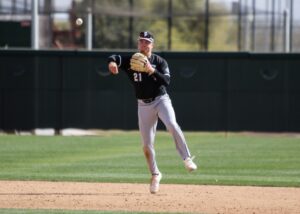
White Sox Prioritize Bats in 2025 MLB Draft
Courtesy of the Los Angeles Times
It would have been easy for the Chicago White Sox to fall into a trap in regards to the 2025 Major League Baseball Amateur Draft. With a burgeoning young core of players filtering into the big leagues, placing an emphasis on the addition of quick moving college talent could have made some sense on the surface. The college crop of prospects available this year just didn’t stack up with the 10th overall pick in the first round so some potential running mates for Chase Meidroth, Colson Montgomery, Edgar Quero, Kyle Teel and even Miguel Vargas will have to wait for now.
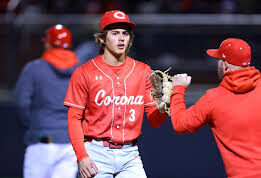
Director of Amateur Scouting Mike Shirley oversaw his sixth draft in the big chair for the White Sox and with the selection of Corona, California prep shortstop Billy Carlson, the department has now used three first rounders on shortstops and three first rounders on left-handed pitching in his time at the helm of the operation. Shirley made multiple references to Chris Getz’s focus on up-the-middle talent, the newly formulated research and development department, his scouting department and newly installed Director of Hitting Ryan Fuller.
When analyzing the totality of the draft class and the specific bonus pool space provided, the plans of the front office started to come into focus. Up-the-middle hitters were a priority in this class and Shirley and his staff were able to blend upside and safety on the offensive side with the addition of four prep hitters and seven more from the college crop. The scouting staff accumulated pitchers who possesses specific criteria as well.
Prep Bats A Priority for White Sox
Despite recording a final record of 41-121 overall in 2024, the White Sox weren’t eligible for the draft lottery due to rule changes in the most recent collective bargaining agreement. As the team with the worst record but the lottery rules in place for large market clubs, they were awarded the tenth overall selection. While it was an unfortunate turn of events as a whole, the circumstances worked out for the club with a draft class lacking star power at the top.
Billy Carlson could’ve gone much higher and he has superstar potential despite some of the inherent risk in this specific class and within his prospect profile. “He does a lot of things the Southern Cal kids are supposed to do to get you excited about as a player”, said Shirley on the club’s first rounder. “I always said, one of these days I want to take one of these Southern Cal shortstops because I think they’re exciting.”
Carlson possesses five tool potential at a premium position and while he signed for slot value in the first round, the outcome is a solid one for a team desperate for upside like the White Sox. The 6-1, 185 pounder has earned 70-grades for fielding and his throwing arm as a former standout pitcher. He was also lauded for his bat speed and athleticism. There should be more power coming along the way and the 18-year-old has already discussed swing alterations with the organization according to Shirley.
“I’ll be frank, the defense at shortstop is some of the best I’ve ever seen at the amateur ranks,” Shirley said. In reference to adding the California kid, Shirley added that, “They’re exciting, they put people in the seats. Has highlight-reel ability. I’m super excited about Billy Carlson and glad the White Sox got that opportunity tonight.” Carlson is the type of athlete that the organization seeks in the draft and the group was thrilled to get the player who they relayed was the top prep shortstop on their draft board.
In regards to the offensive profile, multiple staff members got involved in the process. The White Sox performed a private workout with Carlson late in the process while at the University of Tennessee. Shirley attended with Chris Getz, director of hitting Ryan Fuller and performance director Geoff Head and the group was impressed. Shirley cited the shortstop’s increasing success against velocity on the summer circuit as well as his likelihood to further fill out physically as positives as well.
The California prep has too much hand load presently with some lower half issues in the swing as well but the White Sox seem confident that he’ll thrive under their development. “If they’re wiry and lean, they have this wiry strength plus all this projection to them, you just get super-excited about what the future could look like for Billy,” said Shirley. “The bat speed. He moves very easy. Sometimes the stride gets a little bit big, but as he gets stronger that’s all going to calm down. Just think about how mobile he is. As he gets stronger, how that frame tightens up and really starts to control what he needs to do. When he touches the ball it stays in the air a long time. Really good, efficient when using the opposite field, the gap.”
The White Sox followed up the selection of Carlson with another prep hitter at the top of the second round. In similar fashion to the choice of Michigan prep Caleb Bonemer in 2024, Nazareth Academy product Jaden Fauske was given a $3 million bonus to join the organization with the #44 overall selection. Also in the same vein as Bonemer, Fauske is a Midwest player with numerous ties to the organization.
The White Sox will start Fauske’s career in center field and they feel that he has an advanced approach at the plate with the potential to hit 20 homers in the big leagues. He was one of the best left-handed bats in the high school group. Our research and development department, along with Ryan Fuller, they were super excited about Jaden as this thing began,” said Shirley. “Everyone thought Jaden was one of the best prep left-handed hitters in the class. So the ability to capture him was super exciting as a whole.”
As a member of the White Sox Area Code Team, the 6-3, 200 pounder was pretty familiar with some high ranking members of the organization and he also has ties locally. Hall of Famer Jim Thome is a bit of a mentor and served as an assistant coach for the 18-year-old’s high school team as well. The franchise was sold on the smooth left-handed swing and the disciplined approach primarily but their love for local players hasn’t been a secret under the leadership of Shirley.
“He’s a local kid, man,” Shirley said. “I’ve said all along, local kids, if we feel they have the ability, the White Sox are going to be in there. This is our city, man. We believe in the people that live here. He’s a fan, he’s a White Sox fan. We’re not taking anything for granted. We think these players are worthy of this opportunity to be with us, so why not put them in their hometown? And I’m excited to have another hometown kid on the resume.”
At the conclusion of day one, Shirley elaborated on the possibility that the club wasn’t quite finished adding prep talent in the 2025 class. California teenage catcher Landon Hodge became the first pick in the fourth round and the White Sox were excited about the potential to add this type of profile with the 106th overall selection.
“This guy is super athletic, he’s a switch hitter,” Shirley said. “You usually don’t get these guys at that price point and able to secure him in the fourth round was something we couldn’t pass on. That fourth round discussion was like two hours long this morning.” The 6-1, 175 pounder signed for $1.1 million and he’s seen as a left-handed catcher with an above-average arm and athleticism.
There are some concerns about Hodge’s offensive game but he was the #65 overall player on the draft board of The Athletic’s Keith Law. He was once committed to Stanford and Shirley praised the teenager’s makeup and noted that he’s overcome some adversity in life as well. Hodge attended Crespi Carmelite High School and he showed summer showcase success with a hit over power profile and average run times. The White Sox also believe that Hodge’s receiving ability has improved quickly with more growth coming.
If you thought Billy Carlson was old for a prep shortstop, the White Sox made you hold their drink in round 11. The club selected 6-2, 175 pound infielder Matthew Boughton out of Covenant Christian Academy and the Texas A&M recruit signed for $200,000 in a priority draft round. Boughton is a lean-framed athlete with shortstop actions and an above-average arm.
The White Sox are betting on the athlete with a great glove who will need to add size and strength to his frame. Boughton was a track and field standout in high school and he’ll be 20-years-old in September. Shirley was intrigued by what he called “five tool potential” and noted that the club was “super excited to get that guy done”.
“The signability was too big and then all of a sudden the kid decides ‘You know what? I want to sign'” said Shirley. “The relationship our area scout Alex Glenn had with the kid, Ryan Dorsey mid-south crosschecker had with the kid, we were able to accomplish with Boughton what we had no forethought that we’d have. We thought about taking him in the fifth round, we got him done in the 11th round for half the price, which is unbelievable. It’s exciting.”
Shirley also noted that Boughton was “dinged” by the industry due to his chronological age and the scouting director spoke about the differences between chronological age and developmental age in regards to baseball prospects. It’s definitely a factor in the evaluation process but it isn’t something that has deterred the White Sox from drafting players like Colson Montgomery and even Billy Carlson.
With rookie ball ending, fans aren’t likely to see any of these players in affiliated minor league action for awhile. Carlson, Fauske, Hodge and Boughton will go to Arizona to play in bridge league games and then participate in fall instructional league as well. The White Sox have added a plethora of prep talent in Shirley’s six years in the big chair. It’s starting to bear some fruit with Colson Montgomery in the big leagues, Noah Schultz and Caleb Bonemer being featured on prospect lists and Tanner McDougal breaking out as well.
Confidence with College Crop
“We’re extremely excited about being disciplined with what we’re trying to accomplish: middle-of-the-field players,” said Shirley. “Things we talked about yesterday like contact, decisions, some damage stuff in there. I really liked just the baseball players that mix in with that crew. More position player-dominated than we’ve gone in the past, which we’re excited for because we are looking for some offense and we’re looking to continue to try to build that out.
It was a mandate from general manager Chris Getz to get offensive in this draft. He’s discussed the need to acquire hitters in trade talks as well and the White Sox went out and selected 11 hitters in the 2025 Draft. In addition to taking four swings on up-the-middle prep talent early on, the decision makers got a bit more traditional by adding seven hitters of the college variety as well. The staff grabbed two college shortstops, a highly regarded college catcher, one of the best senior corner guys in the country and three outfielders to round out their class.
Kyle Lodise was an underslot third rounder to finalize the haul on night one of the draft. The 5-11, 180 pound right-handed hitter triple slashed .329/.429/.667 with 16 homers for Georgia Tech this season after spending two years at DII Augusta. While at Augusta, the 21-year-old posted a 1.200 OPS as a sophomore while hitting 23 homers in his two seasons. He’s one of the rare hitters who the White Sox have taken despite some struggles with wood bats in the Cape Cod League.
Kevin Burrell has been scouting Georgia and South Carolina for decades and the area scout believes that Lodise is “very twitchy, agile and athletic with quick glove to hand actions at shortstop”. “He plays all infield positions and should stay up the middle with bat to ball skills, barrel control and the ability to hit to all fields”, said Burrell. The infielder’s “double plus makeup” was lauded as well.
When discussing Kyle Lodise’s junior season in the ACC, Shirley noted that one of the domino effects of the transfer portal has been players of this archetype getting undervalued out of high school. Lodise performed as a Georgia prep but was relegated to Division II before ultimately transferring, showing off his skills and receiving $925,000 in the third round of the Rule Four Draft.
The White Sox considered taking Florida infielder Colby Shelton in the 2024 Draft but they couldn’t agree on terms. The scouting staff had been on him for years according to Shirley. The 6-0, 205 pounder posted a .920 OPS in 2024 with 20 homers but he was discounted due to a 26% strikeout rate. Shelton hit 25 homers for Alabama during his freshman season as well but also posted a strikeout rate above 20%.
Shirley noted that the 22-year-old got too “chase happy last year” and that his “swing decisions got better this year”. The White Sox believe that he improved at shortstop and they were excited about him in the 6th round at this price point. Shelton hit .377/.458/.606 this season and cut his strikeout rate down to 12% but he only hit seven homers. The White Sox believe in his left-handed power going forward however.
The focus on up-the-middle college performers continued in the 12th round with draft eligible sophomore Ely Brown out of Mercer. Burrell said that it’s a center field profile. “He’s a good enough athlete to play all three spots. A left-handed hitter with very good bat to ball skills,” said Burrell. “He has an all fields offensive approach and controls the zone with more walks than strikeouts. Shirley also gushed about the draft eligible sophomore’s speed, contact profile and in zone decision making.
The 6-0, 180 pounder hit .320/.459/.401 with a 16% walk rate and 11% strikeout rate last year. He only hit three homers and power hasn’t been a huge part of his offensive profile to date. Brown signed for $175,000 in round 12 meaning he was a priority for the club as $25,000 counted against the bonus pool. The White Sox also added Georgia State outfielder Kaleb Freeman and Kansas outfielder Derek Cerda as well.
Shirley noted that the club was happy to land Freeman and Cerda. “That’s what you know Ryan {Fuller} really had his eyes on those guys and the evaluations kind of match up. So when we talk about Ryan’s vision of it, he sees it, we try to make sure the evaluations of the scouts match up,” said Shirley. “We’re looking for this merge right? And we talk about the three lanes of the highway all the time. Your statistical performance, R&D and then evaluations”.
Freeman is a 5-11, 195 pounder who played at four different schools in college. He hit .349/.504/.732 with 16 homers and 28 doubles last year. He was the fourth player drafted from Kevin Burrell’s area this year. He noted that Freeman possesses a “good swing with power and strike zone awareness”. The bat and power potential is the calling card but the club announced him as a utility player.
Cerda previously played at Western Oklahoma State and the 6-1, 190 pounder clubbed 10 homers for the Jayhawks while hitting .279/.410/.503 on the season. He posted a 15% walk rate as well. He should be able to handle an outfield corner defensively and might have to with Fauske and Brown in the same draft class.
“When those R&D components of statistical modeling, how the player does extremely well to be a good player, just from stats, pure stats, and then the evaluations match up; that’s a target for us,” Shirley said. “How we really start to separate players. We call it the three legged stool. The three lanes of the highway that we’re always chasing to try to make those lanes merge in the modern day world. How you mix analytics and evaluations together. So it’s good stuff.”
In the 13th round, the White Sox selected Texas catcher Rylan Galvan who was ranked as the #176 overall prospect at MLB Pipeline. The 6-0, 215 pounder hit .296/.452/.613 with a 27% strikeout rate. Galvan has plus raw power to all fields and walked at a 20% clip with 15 homers last year. There are legitimate hit tool concerns though. The White Sox love his toughness and they believe that he’s improving defensively.
When asked about why they selected Galvan, Shirley echoes that, “he’s the catcher on the #1 team in the country.” Special assistant Phil Nevin has a relationship with Troy Tulowitzki; currently an assistant coach for the Longhorns and the reports on Galvan were positive. The White Sox believe in his makeup and Shirley noted that “he’s making huge strides.”
The White Sox rounded out their class with Rhode Island corner infielder Anthony Depino who was seen as a notable senior prospect by Baseball America. The 5-11, 220 pounder slashed .354/.505/.730 with more walks than strikeouts. The right-handed hitter clubbed 20 homers last year and hit 65 total in college. He also posted an OPS over 1.000 in three college seasons. He signed for $150,000 which is a significant bonus number for a college senior.
White Sox decision makers were attracted to Depino due to his numbers but also his hard contact ability and swing decisions. He was a major favorite of East Coast Crosschecker Steffan Segui according to Shirley. “He can really hit,” said Shirley. The Sox watched him tear up the New England Summer Collegiate League as well. The 22-year-old showed an average exit velocity of 92.9 mph with a 90th percentile exit velocity of 111 mph. Depino has possesses plus power to the pull side.
Pivoting to Supinators on the Pitching Front
The White Sox have been pretty pitching heavy in the draft over the years and 2025 was a multi-fold change that Mike Shirley elaborated upon during his media call. There was an emphasis on the addition of offense and the club didn’t believe that the college pitching class was a strength while understanding that it would be difficult to add prep pitching while achieving their other goals.
“When we looked at the draft as a whole, we thought it was a little light college pitching-wise,” said Shirley. “We knew there were going to be limited opportunities on the high school front, just dollars and where they were probably going in terms of the investment in the position player, what they were going to cost. So we knew on pitching front, on the high school front, we were going to be a little bit light from a signability standpoint and we did think the college pitching was a little bit not up to par for us,”.
The White Sox shot for upside in the fifth round with Oklahoma State righty Gabe Davis. The 21-year-old was ranked for multiple pre-draft publications and he signed for $590,000 after missing a lot of time with injuries in college. The 6-9, 234 pounder pumps his fastball into the high 90’s with a low 90’s slider despite posting a 5.92 ERA this spring.
Shirley stated that Davis was a “premium guy” for the White Sox to target coming into the season. The scouting director also made it known that the right hander got off to a fast start but then ultimately got injured and suffered a “bump in the road” this past season. Davis broke his collarbone and missed extensive time. He took awhile to get tamped back up and back into action.
East Coast Supervisor Juan Alvarez recently watched Davis pitch in the Cape Cod League according to Shirley. “The velocity is coming back,” said the director. “We think it’s elite stuff. The changeup is really good and we like the mover. We think there’s real upside,” said Shirley.
Davis is likely to join an affiliate and the organization sees him as a starter long-term. With this group of pitchers selected, it’s a bit difficult to differentiate between starter and reliever profiles. In the 8th round, the club drafted Ohio State righty Blaine Wynk and he’s a guy who has done both in his college career.
“Blaine Wynk is a guy with big time stuff from Ohio State,” said Shirley. It was pointed out that the 6-3, 205 pound righty also started at a smaller school and is a “really good mover’ who sat 94-98 mph at the MLB Draft Combine. “J.D. Heilmann {Midwest Area Scout} is super excited about his upside,” Shirley said.
The 21-year-old signed for slot in the 8th round which was nearly $250,000 and he was rated as the #402 overall prospect in the draft class by Baseball America. Wynk posted a 4.53 ERA as a freshman at Findlay before throwing out of the Buckeyes bullpen in 2024. His transition to the starting rotation ended after 8.2 innings due to injury this past season. He should get the opportunity to remain a starter initially in the White Sox’s organization.
One trend in this group of pitchers that was apparent is that they’re all supinators. Pitchers whose natural arm action involve more forearm supination (turning the palm up) than pronation (turning the palm down) fit this specific criteria. It insinuates that the White Sox are focused on arms who can throw more seam-shifted pitches like cutters and sinkers.
Shirley also discussed how the industry as a whole has worried less about arm action as a deterrent but the club is always focused on how pitchers can attack opposite handed hitters. “Banny’s {Brian Bannister} always paying attention to that stuff,” said Shirley. ‘This guy is on the forefront; super creative. Banny always talks about about pronators and supinators.”
In the 14th round, Max Banks of Washington was the selection. He started his career at Chapman University before posting a 3.86 ERA in 13 starts with the Huskies last year. The 6-4, 225 pound righty throws lots of strikes and the 22-year-old likely stays in a starting role with the White Sox. Joe Doyle of the Over-Slot Podcast and Future Stars Series is a fan of the former D-III arm.
Caedmon Parker is a 6-4, 190 pound right hander who threw as a starter for Texas Christian University last season. The 22-year-old possesses a five pitch mix but his stuff was better in relief and his 94 mph fastball could thrive in a bullpen role. “We’ve been chasing him forever; back to his high school days,” said Shirley. ‘He’s just a great kid who has always been a plus athlete with stuff”.
Landen Payne is a 6-2, 225 pound righty from Southern Mississippi with a mid 90’s fastball and slider combination. The 22-year-old struck out 47 and didn’t walk many in 32.2 innings. Nicholas Weyrich is a submarine righty of Marshall who Brian Bannister had been targeting for years according to Shirley. He was selected in the 19th round.
Andrew Sentlinger is a lefty reliever from Virginia Tech who signed fore $150,000 in the 20th round. He underwent Tommy John surgery this year and should be ready for next season. He made just 40 appearances in three seasons but struck out 65 batters in 52.2 innings but accumulated walks as well.
John Stott is the club’s area scout in that region and he noted that Sentlinger’s stuff was overwhelming on occasion. “He has a really good fastball with deception, plus extension and ride through the zone.” There was another 6-9 pitcher in the class as well as the Sox selected Iowa reliever Daniel Wright in round 10. The 245 pounder doesn’t strikeout very many guys with a low 90’s heater and slider combination.
Baseball America wrote that Eikhoff is a “plus strike thrower and reliable starter for Coastal Carolina”. He posted a career 4.3% walk rate with a fastball in the 90-92 mph range with a low 80’s slider and mid 80’s changeup as well. The 5-10 righty posted a 3.10 ERA for the Chanticleers in their World Series run over the course of 17 starts and 90 innings.
“He can flat out pitch with a heavy sinker, sweeper and changeup,” Burrell said. The White Sox have drafted numerous Coastal Carolina guys over the years. Shirley discussed how everyone is chasing stuff constantly and included the White Sox in that summation. There are many guys with better stuff than Riley Eikhoff but he knows how to pitch. “This guys helps you win games. He helps you win the game,” said Shirley.