White Sox 2026-27 Offseason Primer: Roster Decisions, Free Agency and What to Watch
The Chicago White Sox are already making changes to their roster following a 2026 season that ended one victory short of the American League Championship Series.
On November 2, the White Sox claimed infielder Graham Pauley off waivers from the Miami Marlins while outrighting left-hander Ky Bush and outfielder Junior Pérez. Those transactions came after six players became free agents and six others were reinstated from the 60-day injured list.
For the first time under general manager Chris Getz, the White Sox are coming off a playoff season. Chicago improved by 24 wins and reached the ALDS, giving the front office an opportunity to build on a young roster that exceeded expectations.
Starting pitching figures to be the organization’s biggest priority after the rotation finished with the fewest innings pitched in Major League Baseball. Getz has acknowledged the need for outside additions, while a potential lockout following the December 1 expiration of the collective bargaining agreement could accelerate activity across the league.
Before Chicago addresses those larger needs, several roster decisions and important deadlines await.
A Busy November Before a Potential Lockout
The first few weeks of the offseason could be unusually active across baseball. The current collective bargaining agreement expires at 11:59 p.m. ET on December 1, and an owners’ lockout is widely expected if MLB and the Players Association cannot reach a new agreement.
The General Manager Meetings are scheduled for November 10-12 in Las Vegas. As former Braves GM John Coppolella recently explained for Baseball America, these meetings often lay the groundwork for trades and free-agent signings that come together weeks later. Those discussions could carry added importance with a potential lockout approaching on December 1. MLB owners are also scheduled to meet November 17-19 in New York.
Several awards will also be announced throughout November. The BBWAA will reveal its Rookie of the Year winners on November 9, followed by Manager of the Year on November 10, Cy Young on November 11 and MVP on November 12. The MLB Awards ceremony is scheduled for November 11 in Las Vegas, while Silver Slugger winners will be announced November 17.
Players became eligible to sign with new clubs on November 2. November 17 brings two important deadlines. Players have until 4 p.m. ET to accept or reject qualifying offers, while clubs must add eligible prospects to their 40-man rosters by 6 p.m. ET to protect them from the Rule 5 Draft.
The non-tender deadline follows on November 20. Clubs must decide whether to offer contracts to their remaining arbitration-eligible players and others under team control. Tendering a contract preserves a team’s rights to a player without necessarily resolving his salary for 2027.
The Winter Meetings are scheduled for December 7-9 in San Diego, with the MLB Draft Lottery set for December 8 and the Rule 5 Draft following on December 9. A work stoppage could disrupt those events. The major league portion of the Rule 5 Draft was canceled during the previous lockout in the 2021-22 offseason, although the minor league phase proceeded.
Negotiations have already introduced uncertainty beyond the calendar. On November 3, MLB proposed introducing a salary cap and floor in 2028, with an initial $258.2 million cap and $180.2 million floor. The league identified the White Sox among 12 clubs that would need to increase payroll under the proposal.
The Players Association rejected the proposal. Neither a salary cap nor a payroll floor has been agreed upon.
A lockout would primarily affect players on 40-man rosters. Most minor leaguers operate under a separate collective bargaining agreement and could continue their offseason development even if major league transactions are frozen.
The 40-Man Roster Reset
Six players from Chicago’s 2026 roster became free agents: Erick Fedde, Randal Grichuk, Sean Newcomb, Tommy Pham, Trevor Richards and Jake Rogers.
Chicago also reinstated Brooks Baldwin, Prelander Berroa, Ky Bush, Jordan Leasure, Tanner Murray and Mike Vasil from the 60-day injured list. Those moves initially returned the 40-man roster to full capacity, according to MLB’s transaction log.
The subsequent waiver claim of Pauley and outrights of Bush and Pérez brought the roster to 39 players.
Pauley, 26, was a 13th-round selection by San Diego in the 2022 MLB Draft and earned the Padres’ Minor League Player of the Year honors in 2023. The left-handed hitter provides another infield option after spending much of the past two seasons between Miami and Triple-A Jacksonville.
Chicago has also begun replenishing its pitching depth. On November 5, the White Sox announced the signing of right-hander Alec Marsh to a minor league contract with an invitation to Spring Training.
Marsh, 28, last pitched in the majors with Kansas City in 2024, posting a 4.53 ERA with 123 strikeouts over 129 innings. Shoulder problems have kept him out of major league action since then. The former Royals No.70 selection in 2019 also previously worked with White Sox pitching coach Zach Bove.
Further decisions are approaching for the club’s six arbitration-eligible players. Miguel Vargas and Brenton Doyle headline the group, while Joey Bart, Huascar Brazobán, Chris Murphy and Jordan Leasure also face contract decisions.
Bart stands out as a potential non-tender candidate. Just Baseball’s arbitration projections estimate a $2.9 million salary for the catcher. Chicago already has Kyle Teel, Edgar Quero and Drew Romo among its catching options.
Leasure presents a different situation. The right-hander underwent a second Tommy John surgery in August and is expected to miss the entire 2027 season. Chicago must decide whether to retain him on the 40-man roster or open a spot for another player.
The White Sox also must determine which eligible prospects to protect from the Rule 5 Draft by November 17.
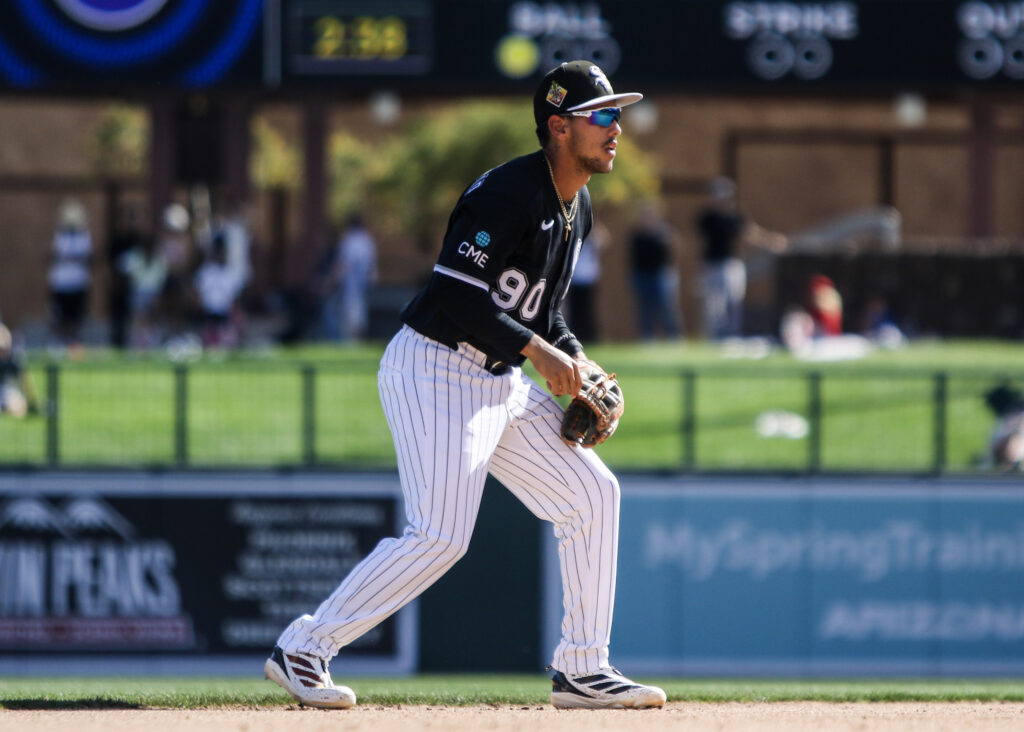
Infielder William Bergolla Jr. appears to be the most likely addition. Ranked No. 11 on the FutureSox midseason prospect list, the 21-year-old was acquired from Philadelphia in the 2024 Tanner Banks trade. Bergolla has elite contact skills and the ability to play both middle-infield positions. Leg injuries derailed his 2026 season after a strong start at Triple-A, but he remains a potential future utility option in Chicago.
Other eligible prospects will receive consideration as the club weighs their development against the possibility of losing them in December. Chicago’s organizational infield depth could also create opportunities for trades that address other needs while clearing roster space.
The turnover extends into the minor leagues. Baseball America reported that 504 players were declared minor league free agents on November 2, including 13 from the White Sox organization.
Among the more recognizable names are Jairo Iriarte, Tim Elko, Korey Lee and Joey Wiemer. Some could return on new contracts, but Chicago will still have vacancies to address at Triple-A Charlotte and elsewhere in its system.
Starting Pitching Will Drive the Offseason
The White Sox found ways to win without relying on a traditional starting rotation in 2026. Repeating that approach over another full season would be difficult.
Chicago’s starters combined for just 674 2/3 innings, the lowest total in the majors, while posting a 4.60 ERA. The lack of length became especially apparent during the postseason, when manager Will Venable frequently used openers and relied on several relievers to cover multiple innings.
Sean Burke provided the most stability. The right-hander finished the regular season with a 3.34 ERA and 185 strikeouts over 172 1/3 innings before emerging as the team’s most dependable starter in October.
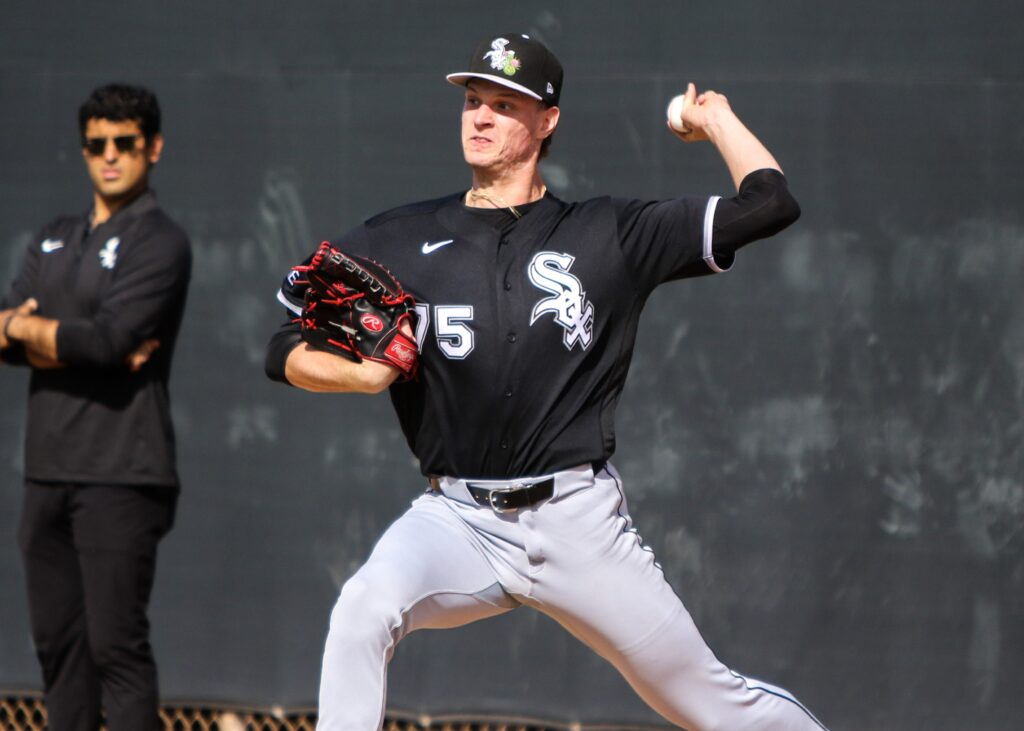
Davis Martin and Anthony Kay remain under contract, while Noah Schultz, Hagen Smith and David Sandlin provide additional options. The organization also must decide how to manage the workloads and potential future roles of several young arms, including Grant Taylor.
Luis Castillo complicates the picture. Chicago acquired the veteran from Seattle at the trade deadline, but he posted an 8.42 ERA in nine appearances before landing on the injured list with a shoulder injury. Castillo is owed $22.75 million in 2027, meaning the White Sox will have to account for his salary without assuming a return to his previous form.
Several established starters are available beyond Tarik Skubal, whose expected record-setting contract would require a financial commitment unlike anything Chicago has made.
Michael King and Freddy Peralta are among the more prominent starters Chicago could pursue, although neither figures to come cheap. King rebounded from an injury-shortened 2025 campaign to make 32 starts and post a 3.21 ERA over 185 innings this season.
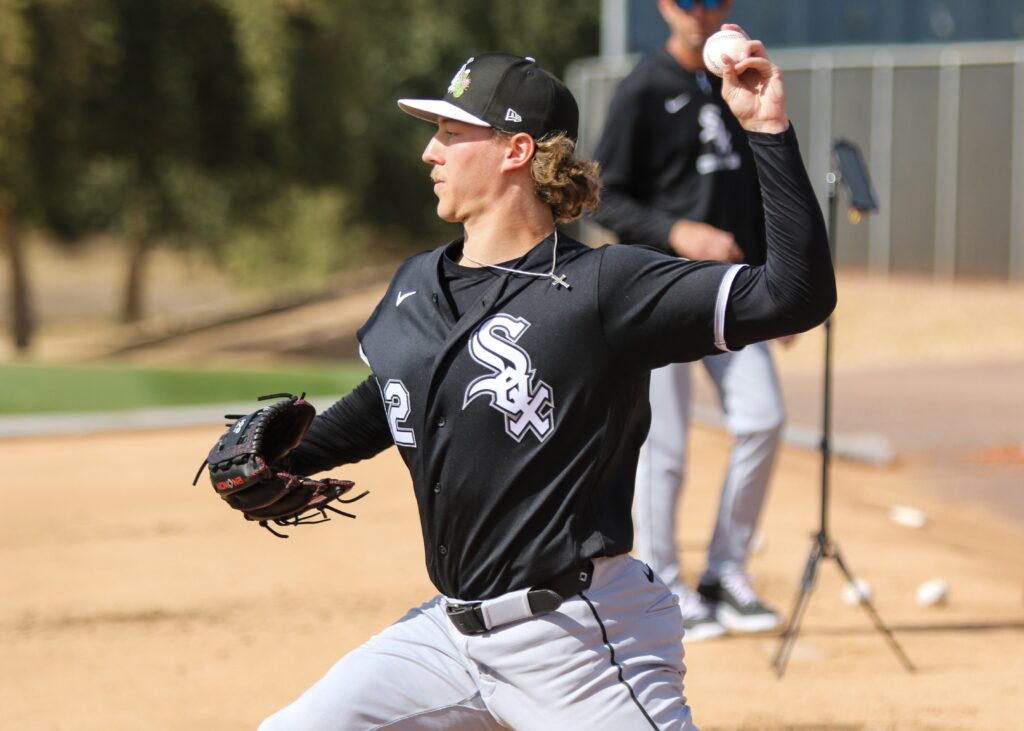
Clay Holmes is another name worth watching, particularly given his previous connection to the White Sox. USA Today’s Bob Nightengale linked Chicago to Holmes ahead of the July trade deadline, although the specific scouting activity described in that report has been disputed. FutureSox has also heard the former closer mentioned as a potential offseason fit, but no renewed interest from the organization has been confirmed.
Holmes successfully transitioned to the rotation in 2025, posting a 3.53 ERA over 165 2/3 innings. A fractured fibula interrupted his 2026 campaign before the Mets traded him to the Cubs, but he finished with a 3.29 ERA across 101 1/3 innings. He subsequently declined his player option for 2027 and is now available in free agency.
Sonny Gray offers another established option after posting a 2.72 ERA over 169 innings with Boston in 2026. The veteran declined his mutual option for 2027 and could command a significant contract despite his age. Kevin Gausman and Nick Martinez may offer more affordable alternatives for a club seeking dependable innings without a lengthy commitment.
Draft-pick compensation could further narrow Chicago’s options. None of those pitchers carries qualifying-offer restrictions, while Baltimore extended one to Trevor Rogers. Given the current front office’s emphasis on building through the draft, surrendering a selection to sign Rogers appears unlikely, particularly with several established alternatives available without that additional cost.
Other left-handed possibilities include Foster Griffin and Robbie Ray. Japanese right-hander Kaima Taira presents a different kind of investment after recording a 1.36 ERA over 146 innings for the Saitama Seibu Lions in 2026.
Taira was posted on November 1, giving MLB clubs a window to negotiate with him until the sport likely shuts down for the winter. His fastball works in the mid-to-upper 90s, and his return to starting in 2026 adds to his appeal. The White Sox were among the teams reportedly scouting his August 26 start in Japan, although no subsequent negotiating interest has been reported. Taira may not be the only player on the international market worth exploring this offseason.
Jim Bowden of The Athletic identified several of these pitchers as potential fits for Chicago in his free-agent rankings. Those are assessments of potential fits rather than reports that Chicago is actively pursuing those pitchers.
Andrew Benintendi’s five-year, $75 million agreement remains the largest free-agent contract in franchise history. Chicago reportedly offered Zack Wheeler a five-year, $125 million deal before he signed with Philadelphia in December 2019, demonstrating that the club has previously pursued pitchers at a higher level than its completed contracts suggest.
As Jim Margalus explored at Sox Machine, several of this winter’s projected starting-pitcher contracts fall near that historical range.
King provides one example. ESPN projects a three-year, $79.5 million deal, while other outlets have forecasted four-year commitments approaching or exceeding $100 million.
Any of those contracts would establish a new White Sox franchise record in guaranteed money. Chicago also faces a longer-term decision with Munetaka Murakami, who will enter the final season of his two-year, $34 million agreement in 2027. Getz has expressed interest in keeping Murakami beyond that deal and confirmed that extension discussions would continue. Younger players such as Miguel Vargas and Sam Antonacci could eventually warrant similar consideration, although no negotiations involving either have been reported.

Trades offer another avenue. The White Sox showed interest in Angels left-hander Reid Detmers before the 2026 deadline, according to Yahoo Sports.
Renewed offseason discussions have not been reported, but Detmers represents the type of controllable starter Chicago could pursue with its prospect depth.
Adding an established starter through either market would give Venable more flexibility than he had during the 2026 postseason.
The Bullpen and Outfield Also Need Attention
Chicago’s pitching needs extend beyond the rotation.
The bullpen was central to the team’s postseason strategy, with several pitchers taking on demanding workloads. Newcomb’s departure removes a versatile left-handed option who threw 90 1/3 innings in 2026, while Richards provided another 78 2/3 innings before reaching free agency.
Leasure’s expected absence creates another opening in the relief corps. Chicago has younger pitchers to evaluate, but adding dependable outside help could reduce the burden on those already filling multiple roles.
Emilio Pagán is among the veteran relievers available after declining his $10 million player option with Cincinnati. The 35-year-old recorded 25 saves with a 3.38 ERA in 2026, although no specific White Sox interest has been reported.
The outfield presents a different challenge.
Tristan Peters emerged as an All-Star in 2026, while Brenton Doyle arrived at the trade deadline to provide another strong defensive option in center field. Braden Montgomery gained his first major league experience, and Sam Antonacci successfully moved from the infield to left field.
With Grichuk and Pham now free agents, Chicago has room to add another outfielder. Getz has also discussed the organization’s infield depth and the possibility of moving players to the outfield, which could help create opportunities for younger talent.
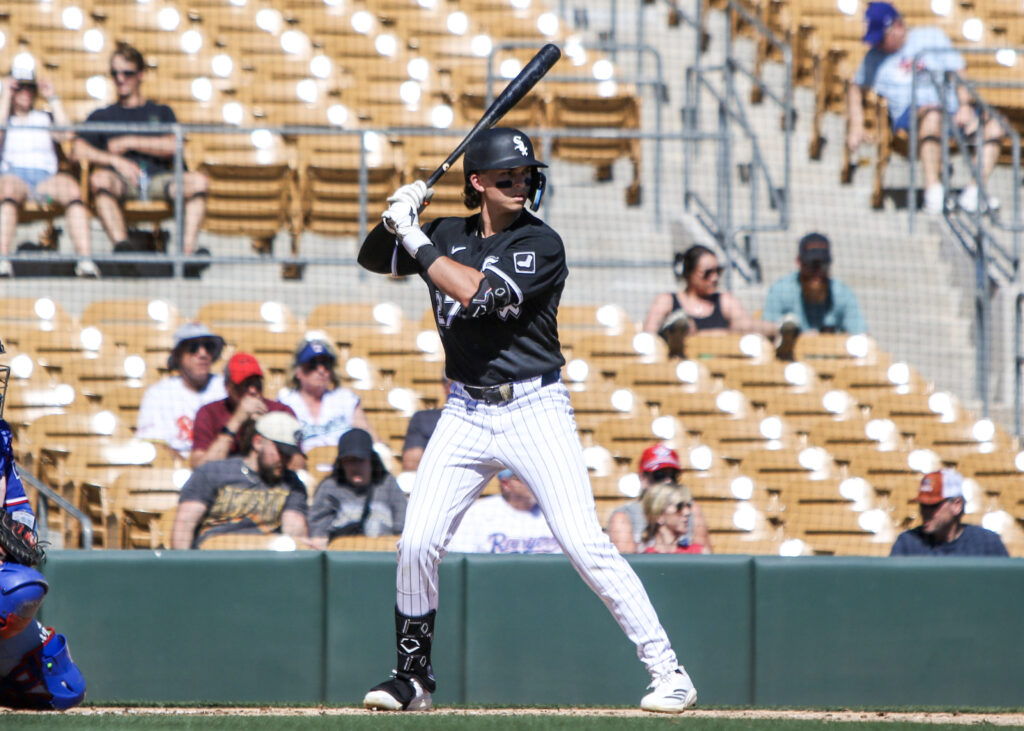
Brooks Baldwin is another name worth monitoring. After missing the season following internal brace surgery on his right elbow, the switch-hitter completed his 16-week throwing program and expects to be ready for Spring Training.
His experience at six positions gives him a chance to compete for a utility role, although he still must establish his readiness in game action.
The White Sox led the American League in runs scored during the regular season, and four hitters have been named Silver Slugger finalists: Chase Meidroth at second base, Vargas at third, Peters in the outfield and Antonacci in the utility category. Chicago is also a finalist for the team award. Meidroth was previously a Gold Glove finalist at second base, although Seattle’s Cole Young ultimately won the award.
The existing offense gives the front office some flexibility in deciding where to add. Its postseason struggles against Cleveland nevertheless illustrated the value of hitters capable of making consistent contact against quality pitching.
Arizona Fall League Provides Another Look at the Farm System
Several White Sox prospects have spent the early offseason playing for the Glendale Desert Dogs in the Arizona Fall League, although injuries and early departures have significantly changed the organization’s representation.
Caleb Bonemer arrived in Arizona following a breakout season in which he hit 37 home runs between High-A Winston-Salem and Double-A Birmingham. He added three homers and nine extra-base hits in 13 Fall League games, finishing with a .286/.364/.633 batting line.
The more important development was his defensive work. Bonemer made 12 of his 13 starts in the outfield, including eight in center, as Chicago continues exploring ways to accommodate his bat in a crowded organizational infield. His routes and reads remain a work in progress, but the additional experience provided a useful starting point for his development at a new position.
Bonemer completed his assignment on October 24. He was subsequently selected for the American League Fall Stars team, although he will not participate in the November 8 showcase.
Colby Shelton also impressed during his time in Glendale. The 2025 sixth-round selection earned AFL Hitter of the Week honors after hitting .462 (6-for-13) with 12 RBIs, becoming the first player since at least 2005 to drive in four runs in three consecutive Fall League games.
Shelton hit .277/.379/.511 over 15 games. FutureSox’s Ian Eskridge confirmed he is no longer on Glendale’s roster, leaving the Desert Dogs without either of Chicago’s two most prominent position-player prospects for the final stretch.
Injuries also disrupted the original roster. Infielder Anthony DePino, who hit 25 home runs between High-A and Double-A during the regular season, underwent shoulder surgery before he could appear in Arizona. Although he remained listed on Glendale’s roster, he did not play. Right-hander Pierce George suffered an olecranon fracture in his pitching elbow, ending his Fall League participation. Both are expected to be ready for Spring Training in 2027.
Those changes prompted additional assignments. Left-hander Tommy Vail joined Glendale following George’s injury, while first baseman Kaleb Freeman was added after Bonemer’s departure. Freeman has seen limited playing time since arriving, and catcher Grant Magill has continued receiving opportunities behind the plate despite a quiet offensive showing.
On the pitching side, Jonathan Clark has emerged as a bright spot. The right-hander earned a Fall Stars selection after recording 11 strikeouts against just one walk over his first 7 1/3 innings, posting a 3.68 ERA. Clark previously spent two seasons in the independent Pioneer League before joining the White Sox organization.
Mathias LaCombe, Nick Altermatt and Garrett Wright have also received additional innings in Glendale, with varying results.
For more detailed weekly coverage of Chicago’s Fall League prospects, FutureSox’s Sleepy Harold has tracked their progress in his Trending on the Farm series.
Matt Roffe Takes Over Amateur Scouting
The White Sox officially named Matt Roffe their director of amateur scouting on Thursday, November 5, confirming last week’s reported hire from the World Series champion Milwaukee Brewers. Roffe, 30, replaces Mike Shirley, with Chicago retaining the traditional scouting director title despite Chris Getz previously discussing a director of amateur acquisitions position.
During his introductory Zoom availability Thursday, Roffe emphasized giving scouts a voice while incorporating objective data and working more closely with player development. He also confirmed that Josh Barfield and Matt Grabowski participated in his interview process, adding another connection to their overlapping time in Arizona.
Roffe’s first draft will look considerably different from Chicago’s last. After selecting UCLA shortstop Roch Cholowsky first overall in 2026, the White Sox are currently projected to pick No. 23 in 2027 following their playoff appearance.
We examined the hiring more closely in our updated FutureSox report, including what Roffe’s arrival could mean for Chicago’s scouting operation.
Outside Interest in the White Sox Organization
Manager Will Venable is one of three finalists for the American League Manager of the Year Award, with the winner scheduled to be announced November 10. Getz has also expressed interest in keeping Venable beyond 2027, the final year of his current contract.
Assistant general manager Josh Barfield interviewed for the Houston Astros’ general manager vacancy, which ultimately went to Randy Flores. Bench coach Walker McKinven also interviewed for the Seattle Mariners’ managerial opening before the club hired Jason Kanzler.
Ken Rosenthal of The Athletic identified Barfield and fellow White Sox executive Carlos Rodriguez as potential candidates for the Los Angeles Angels’ baseball operations opening. Their inclusion was speculative and does not establish that either has interviewed for the position.
Chicago has already lost one member of its major league coaching staff.
Assistant hitting coach Joel McKeithan is leaving after two seasons to become the St. Louis Cardinals’ lead hitting coach. According to James Fegan of the Chicago Sun-Times, hitting coach Derek Shomon and major league assistant Tony Medina are expected back in 2027. An external hire is viewed as the likeliest replacement for McKeithan.
One possible name to monitor is Pedro Guerrero, who served as Miami’s hitting coach alongside Shomon in 2025 and is available after the Marlins decided not to retain him for 2027. Guerrero also spent seven seasons as a major league assistant hitting coach before joining Miami.
No White Sox interest in Guerrero has been reported, but his previous connection to Shomon makes him a potential candidate worth considering.
A New Voice in the Broadcast Booth
Chicago announced on October 26 that John Schriffen would not return after three seasons, declining the option on his contract. A national search for his replacement is underway, while longtime analyst Steve Stone and on-field reporter Brooke Fletcher will return to Chicago Sports Network.
MLB.com’s Scott Merkin identified former ESPN broadcaster Karl Ravech as one possibility. Angels television voice Wayne Randazzo and FOX Sports announcer Connor Onion also have Chicago-area connections, which could factor into the search.
Connor McKnight represents an internal option, having previously called White Sox games and reached the final stages of Chicago’s last search in 2024. ESPN’s Mike Monaco was also considered a leading candidate at the time, but scheduling conflicts removed him from consideration. Monaco previously worked alongside Stone in 2021.
Other names have surfaced in media discussions, including Dodgers broadcaster Stephen Nelson and SiriusXM’s Mike Ferrin.
None of these potential replacements has been publicly confirmed as an interviewee or finalist in the current search. Whoever takes over will inherit a team coming off its first postseason appearance since 2021, with considerably higher expectations than when Schriffen arrived.
International Scouting Faces an Uncertain Future
The White Sox have prioritized rebuilding their international scouting operation under special assistant David Keller, overhauling their staff and restoring relationships in the Dominican Republic. The organization has also invested in a new academy in Boca Chica.
Under the current system, the next international signing period is scheduled to open January 15, 2027.
Looking further ahead, Dominican infielder Ransiel Herrera has been linked to the organization for the 2029 signing class, with Wilber Sánchez reporting a $4 million pre-agreement. Dominican prospect Braston Basker is also reportedly expected to join the 2030 class for a projected $6 million bonus. Neither agreement is official.
However, the upcoming collective bargaining negotiations could disrupt those plans. MLB has proposed an international draft that could eliminate the traditional January 2027 signing period and change how international players are acquired in subsequent years.
No agreement has been reached, leaving uncertainty around years of recruiting work as the White Sox attempt to rebuild their international pipeline.
The Decisions Ahead
The White Sox have spent much of Chris Getz’s tenure accumulating young talent and building organizational depth. Following their unexpected postseason run, the front office now has to decide how much of that depth it is willing to move to improve the major league roster.
Chicago has enough young talent to explore trades while preserving much of its future. Free agency offers another opportunity to address immediate needs, although signing established players would likely require a greater financial commitment than the organization has made in recent years.
The White Sox enter this offseason with expectations that have changed considerably. How aggressively Getz approaches the coming months will help establish whether Chicago is prepared to build on its 2026 success and become a more consistent contender.