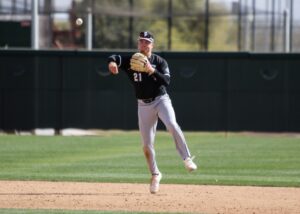
3 interesting White Sox pitching targets for pick #41

via MLB PR
With less than 45 days until the 2026 MLB Draft and the White Sox expected to take a position player top overall, pick #41 could become their first chance to add pitching. As NCAA regionals get underway, this series will look beyond the top pick and highlight draft prospects who could fit the White Sox with their later Day one selections.
The shape of the board will matter. Several higher-upside arms could be gone by then, and Chicago could still choose to use that pick on the best prep player available if the right name gets there.

That leaves a few realistic paths. Jack Radel and Ben Blair offer two different college looks, while Kaden Waechter represents the higher-upside high school route. Radel is the more traditional starter profile and Blair brings a lower-slot look. Waechter carries more risk, but also gives the White Sox a chance to bet on a prep arm with starter traits.
Bonus pool strategy could shape the decision. Savings at No. 1 would give the White Sox room to be aggressive at No. 41 if the right high school player gets there. The other path is taking a college arm closer to slot, then using the remaining pool space to chase an over slot prep target at No. 77 or later.
The ranking line under each player pulls from public draft boards and mocks to show where the industry currently values the player. BA refers to Baseball America, OS to Over Slot, MLB to MLB Pipeline, ATH to The Athletic, PG to Perfect Game and JB to Just Baseball.
Potential College Options for White Sox
Jack Radel, RHP, Notre Dame
BA: 38 | OS: 58 ovr. / 37 college | MLB: 45 | ESPN: 49 | ATH: 35 | PG: 44 | JB: College 28
Radel is a safer college arm who could fit the White Sox at No. 41 if they want pitching after taking a bat at the top. The Notre Dame right-hander has a starter build at 6-foot-5 and 250 pounds. His track record in South Bend gives him the strike-throwing and durability teams often target in this range.
Radel took a clear step forward in 2026, winning Notre Dame Male Athlete of the Year. He fanned 116 batters and walked 22 over 87.2 innings. He held opponents to a .206 average with a 1.03 WHIP. His 2.11 SIERA, ranked inside the top 20 nationally among qualified Division I pitchers.
His fastball now works in the low-to-mid 90s and has reached 98 mph. The pitch plays up because of his release height and extension. His low-to-mid-80s gyro slider is the main bat-misser, giving him a tighter breaking ball that plays off the fastball rather than a big sweeping look. Radel also uses a firm low-90s cutter for strikes, while the curveball gives hitters a different shape off the slider. The changeup is part of the mix, but it remains the least proven offering.
Radel does not have a true plus-plus pitch, which keeps the ceiling closer to a mid-rotation or back-end starter than a frontline arm. His value comes from reliability, making at least 10 starts in each of his three seasons at Notre Dame, including all 15 this spring, while amassing more than 200 innings for the Irish. The improved stuff gives him more upside without changing the foundation of the profile.
If the higher-upside arms are gone, Radel gives the White Sox a way to add a college starter without forcing the pick. Taking a college arm in this range could also help preserve bonus pool flexibility for a bigger prep swing later on Day 1 or early Day 2.
Ben Blair, RHP, Liberty
BA: 37 | OS: 38 ovr. / 23 college | MLB: 54 | ESPN: 42 | ATH: 58 | PG: 49 | JB: College 25
Blair gives the White Sox a different college look if they want an arm at No. 41. The Liberty right-hander works from a low slot and creates a tough angle for hitters. He was named Conference USA Pitcher of the Year after anchoring Liberty’s rotation, giving the profile more performance backing than the delivery might suggest. It is not the most traditional starter look, but the strike-throwing and pitch mix give him a chance to remain in a rotation early in pro ball.
The 6-foot-3, 200-pound righty finished the 2026 regular season with 106 strikeouts and 17 walks over 87.1 innings. He held opponents to a .219 average with a 1.03 WHIP, while his 4.7 percent walk rate tied for sixth-best among qualified Division I pitchers.
Blair’s fastball works in the low-to-mid 90s and has reached 98 mph. His low slot creates heavy arm-side movement and a flat approach that gives hitters a tough look. The sweeper is the main swing-and-miss pitch, showing late depth off the fastball. He also uses a cutter as a firmer bridge between the two, and the pitch has drawn whiffs at a 30-plus percent clip. The changeup gives him another look against left-handed hitters but remains the least developed pitch in the mix.
The question is whether the profile holds up as a starter. Blair has added to his lean frame and already has handled that workload at Liberty, making 15 starts in each of the last two seasons while logging more than 170 innings. The lower slot and changeup development still create some bullpen risk, but the strike-throwing gives him a real chance to keep starting in pro ball.
Liberty opens the Athens Regional against Boston College on Friday, giving Blair one of the better draft-stage tests of the weekend. For the White Sox, Blair fits the same general draft logic as Radel. He would give them a practical college arm in this range while keeping room to be aggressive later.
Potential Prep Option for White Sox
Kaden Waechter, RHP, Tampa Jesuit HS
BA: 63 | OS: 73 ovr. / 33 prep | MLB: 52 | ESPN: 48 | ATH: 37 | PG: 56 | JB: Prep 23
Waechter is the upside option in this group. The Tampa Jesuit right-hander gives the White Sox a high school arm with starter traits if they want to be more aggressive at No. 41. He is more polished than many prep arms in this range. The strike-throwing is advanced for his age, and the delivery already points toward a rotation fit.
Waechter posted a 1.15 ERA over 61 innings as a senior with 82 strikeouts and 15 walks. He held opponents to a .159 average. He also stood out at NHSI, striking out 10 over six innings while showing his fastball-slider combination against national competition.
Standing at 6 ‘3″, his fastball has worked in the low-to-mid 90s and has reached 96-97 mph, with life through the zone and enough command to work both sides. His slider is the main secondary pitch, sitting in the mid-to-upper 80s with power and late bite. He also flashes a firmer changeup, giving him a third pitch to build on.
There is risk in the demographic, Waechter is committed to Florida State, and high school right-handers usually require more patience than college arms. The appeal is the present starter foundation. Waechter already fills the zone at a high clip, and his delivery gives scouts more confidence that the stuff can keep trending up. In a recent state semifinal complete game, he reached 96 and finished with 21 whiffs, nine strikeouts and no walks over seven innings.
If the White Sox want upside at No. 41, Waechter is one of the cleaner prep fits in this range. He could also be a name to monitor at No. 77 if Chicago saves enough money with its first two picks and tries to push an over slot prep player down the board.