White Sox 2026 MLB Draft Preview: Day 1
via MLB PR
The White Sox enter the 2026 MLB Draft with their most valuable amateur selection in nearly five decades.
Chicago holds the No. 1 overall pick for the first time since 1977, when the organization selected Harold Baines. The first pick will drive most of the conversation. It should. The White Sox have a chance to add one of the best amateur players in the country to a farm system that has already improved over the past two years.
But Day 1 will not be defined by one selection alone.
The White Sox also pick at No. 41, No. 77 and No. 105. With a $17,592,100 bonus pool and room to spend roughly 5% beyond that number before draft-pick penalties begin, Chicago has enough flexibility to build the class in several different ways.
The first pick will tell us who they believe is the best player, while the next three picks will show how they want to build the rest of the class.
White Sox Day 1 picks and bonus pool
The White Sox hold four picks on Day 1.
Round 1, Pick 1
Slot value: $11,350,600
Round 2, Pick 41
Slot value: $2,446,100
Round 3, Pick 77
Slot value: $1,086,600
Round 4, Pick 105
Slot value: $747,700
The pool gives the White Sox room to maneuver. The No. 1 pick carries the largest slot value in the draft, but the top selection is not expected to sign for the full number. Any savings could be pushed toward a tougher sign at 41, 77 or 105.
There is also one outside path to adding another premium pick. Competitive Balance selections can be traded, and Pittsburgh’s pick at No. 34 is the type of selection that would change the shape of Chicago’s Day 1 if the Pirates were willing to move it.
That does not mean savings should decide the first pick. White Sox director of amateur scouting Mike Shirley pushed back on that directly this week.
“It’s not about the Major League team. It’s not about the money. It’s about who is the best player,” Shirley said.
The exception would be a record-setting bonus demand the club is not comfortable meeting. That makes the final number important, but the White Sox have framed the pick as a talent decision first. In regards to the top two prospects being represented by the same agency though (Wasserman’s The Team), Shirley stated that, “we’re working hard with the group, with them to figure it out. I think we’ll come to the best solution and they’ll be great partners at the end of the day.”
What Mike Shirley told us
Mike Shirley did not reveal the pick. He did give the clearest read yet on how the White Sox are approaching the top of this draft.
Roch Cholowsky, Grady Emerson and Vahn Lackey remain the three names in play at No. 1. Shirley said he does not expect anyone else to enter that mix.
The decision starts with the player. Shirley said Chris Getz has told the draft group to take the best talent available, regardless of the current Major League roster or the bonus path.
The only caveat is cost. Shirley said a record bonus ask could force the club to pivot, but the White Sox are framing the pick as a talent decision first.
He also pushed back on the idea that one pick has to carry the rebuild. Shirley said the organization is not looking for a savior. The goal is to keep adding to the group already in place, then use the rest of the draft to deepen the system.
That is where the pool comes in. The White Sox have the largest slot value in the draft at No. 1, but Shirley made it clear that the full class has to be built with value in mind. He mentioned pitching depth as one area the organization still wants to strengthen.
His comments on hitters were just as useful. Shirley pointed to the same offensive framework Ryan Fuller has used with the Major League group.
“Contact, decisions and damage are the things we’re trying to chase.”
That quote gives a way to sort the Day one hitter board. The White Sox are looking for hitters with at least two bankable offensive skills. If a player controls the zone and makes contact, the question becomes whether more power can come later. If a player does damage and makes good swing decisions, the question becomes whether the contact rate is playable. If a hitter has contact and hard-hit data, the chase profile and defensive home become more important.
That fits with the way Fuller and the big league staff have talked about offense this season. The White Sox want hitters to control the strike zone, but they do not want passive contact. They want hitters ready to take their best swing when they get the right pitch.
That should shape how the draft board is viewed. A prep infielder with strike-zone feel can fit even if the power is still developing. A college bat with zone contact and exit velocity can fit even if the defensive home is less clear. A corner bat has a higher offensive bar because the bat has to carry more of the profile.
Shirley also connected the hitting model to defensive value. He said there is a reason the White Sox keep taking shortstops and catchers. Those positions hold value across the industry, which helps explain why premium defensive homes remain a key part of their draft thinking.
The process itself sounds more connected than before. Shirley mentioned player development in the draft room, with R&D also part of the evaluation. TrackMan, Hawk-Eye, force plate testing and private workout data all help shape the internal board.
That is where Paul Janish’s perspective from player development fits. The White Sox are trying to pair the evaluation with a realistic development plan. They are looking at the player on draft day, but also at which traits their system can help grow once he enters pro ball.
That is why public rankings only explain part of the picture. The White Sox are weighing performance, data and development fit. Shirley said the group is trying to project what a player can be two or three years from now.
His high school comments fit into that same idea. Shirley pushed back on the belief that prep players automatically need a much longer timeline. Top high school players are already seeing premium velocity, and the training environments are more advanced than they used to be.
The later picks will test that approach. Shirley said there is a high school pitcher the White Sox love later in the draft, though cost will decide whether that player fits. Bonus numbers can shift in the final 24 to 48 hours.
The read from Shirley was clear. The White Sox want the best player at No. 1, then enough flexibility to attack the board after that. Pick 41 is where that plan should start to show.
The No. 1 pick for the White Sox
The White Sox have spent most of the spring tied to the same group at the top. Mike Shirley narrowed it this week to Cholowsky, Emerson and Lackey. That tracks with the broader No. 1 discussion I broke down at Just Baseball earlier this summer.
Cholowsky remains the safest fit. He has the college track record and should stay at shortstop. Shirley pointed to his growth since high school and said he held serve through the spring. He did not separate from the class as much as some expected, but the full profile still gives the White Sox the best path to value at a premium position.
Emerson is the bigger upside bet. Shirley called him an elite high school player with an elite hit tool, and Jim Bowden made a public case for him this week. Bowden’s argument is around the idea that the youngest player in the group could become the best long-term hitter. Taking Emerson would also be a bet on the White Sox development system.
Lackey is the catcher value play. His season at Georgia Tech made this a debate, but Shirley’s comments went beyond the production. He called Lackey a supreme athlete with a chance to define the catching position. The White Sox also gathered private Hawk-Eye data from his workout, giving them another way to verify the bat speed, power and defensive foundation behind the profile.
Lackey would probably give the White Sox the most room to maneuver after the first pick. That is part of the appeal, especially with Shirley talking about pool space and later targets. It still cannot drive the decision. The baseball case has to come first, and the White Sox would need to believe his offensive upside is rare enough for a catcher to belong at the top of the class.
My read entering Day 1 is still Cholowsky. Emerson makes sense if the White Sox want to take the bigger swing on the bat and trust the system they have built. Lackey makes sense if they believe the catcher profile is rare enough to justify the pick, with the added benefit of more room to work across the rest of the pool.
Cholowsky still feels like the best choice. There are swing details to refine, but the track record at shortstop gives the White Sox a strong foundation. That also lines up with Shirley’s broader point. The pick should come down to who they believe will become the best big leaguer. None of the three would be hard to defend, but Cholowsky remains my lean.
Viewing the Board After Number One
After Cholowsky, Emerson and Lackey, the draft starts to get much harder to stack with confidence. Jackson Flora, Jacob Lombard and Eric “EJ” Booth Jr. feel like the next pocket of talent. Tyler Bell and Drew Burress are the two names that could complicate that order. Bell could appeal to a club looking to create savings near the top, while Burress has the type of offensive track record that could push him higher for a model-driven team.
The order feels steadier if Cholowsky goes first. If the White Sox take Emerson or Lackey, the top of the board could open up in a different way. Cholowsky getting to the Giants would suddenly feel more realistic, and one deal pick near the top could change how the rest of the first round settles. That is draft-day chaos more than a prediction, but it is part of why this class is difficult to line up.
That is where this class lines up well for the White Sox. Baseball America has framed the 2026 group as one of the deeper drafts in recent years, and that depth should be felt after the first round. Public rankings can help set expectations, but they do not tell the full story. Age, signability, data, defensive value and player development fit can move a player a full round depending on the club.
On a recent episode of the FutureSox Podcast, Ian and James discussed what might happen with the clubs after the White Sox and specific scenarios were discussed in regards to the Tampa Bay Rays, Minnesota Twins, San Francisco Giants and Pittsburgh Pirates.
Pick 41 should put the White Sox in the middle of that uncertainty. The board may not hand them a first-round faller, but it should leave them with several paths they can defend. A prep bat with a big number can make sense there. So can a college arm with starter traits or a model-friendly hitter. The White Sox just need enough quality to reach them so they can pick the profile they believe in most.
That is why 41 is the pivot point. The pick will show how Chicago wants to use the rest of its pool after No. 1. Since the top pick should create savings either way, the White Sox can decide how aggressive they want to be at 41. They could push for one tougher sign or spread that money across 41, 77 and 105 to build the strongest overall class.
Shirley’s comments about the later board fit that idea. He said the White Sox love a high school pitcher later in the draft, then immediately pointed to cost as the variable. That is the balance Chicago will be working through on Day 1. A player can fit the board and still have to fit the pool.
Dream fallers at 41 for the White Sox
There are a few players who should not be treated as likely White Sox options, but they are worth keeping in mind if the board breaks strangely.
College pitchers
This is the fun part of the board, not the likely one. These arms should not be treated as expected White Sox options, but each would change the conversation if the board and bonus pool break right.
Mason Edwards of USC and Hunter Dietz from Arkansas would be the dream outcome from the college pitching group. I think the White Sox would love a chance at either if the board somehow pushed one to 41, but that still feels unlikely. Both fit higher than Chicago’s second pick, even with enough relief risk to create some range.
Cameron Flukey from Coastal Carolina is the biggest swing of the group. Getting him to 41 would likely require meaningful savings at No. 1 and an aggressive overslot offer. If the White Sox took Lackey first, pairing him with Flukey would be the dream version of that strategy.
Cade Townsend and Tegan Kuhns feel like the more realistic version of this bucket. They still may not reach Chicago, but they are worth watching if the first round pushes college pitching down. Another Ole Miss name could fall, Taylor Rabe belongs in the next tier of more realistic 41 options. If one of these higher-end arms gets through, the White Sox would have a chance to add a pitcher with solid ceiling after taking a position player at No. 1.
Prep pitchers
Prep pitching is the trickiest dream-faller group because availability and signability are tied together. Carson Bolemon and Logan Schmidt are probably the true dream names. If either is still there at 41 and the number works, Chicago would have to seriously consider using a chunk of its pool on a high-end high school arm.
Coleman Borthwick belongs in the same conversation. They’ve been connected to him this spring and may be a little easier to imagine reaching this range, but the calculation would be the same. The White Sox would need to decide whether that arm is worth concentrating money at 41 or whether they are better off spreading the savings through the rest of Day 1.
This is also where Shirley’s comment about loving a high school pitcher later in the draft lines up. I would not attach a name to that quote without confirmation, but this is the kind of group that makes the line worth remembering.
Prep position players
If the White Sox want to take their biggest swing at 41 on a prep position player, this is the group to watch. Trevor Condon and Bo Lowrance may go too high or carry a number that makes the math difficult. Cole Prosek would be strong value if he got there, but he feels more likely to be gone in the comp round.
Archer Horn is the prep infielder I would circle more aggressively than James Clark. The Stanford commitment makes the bonus piece complicated, but the talent and offensive fit make him the kind of overslot swing that could line up if Chicago saves enough at No. 1. Aiden Ruiz has some Billy Carlson-style appeal because of the glove. Taj Marchand has been connected to Tampa Bay by Carlos Collazo of Baseball America, which could make him tough to get to 41. Clark still belongs in the conversation if he slides, but Horn feels like the better fit for this range.
Tyler Spangler is the wild card. The talent belongs in the discussion, but the injury and Stanford commitment make the range harder to handicap. It would not be surprising if Stanford gets one of Horn or Spangler to campus.
Will Brick gives the group a catcher angle. If he is the top prep catcher on the White Sox board and reaches 41, the position value alone would make him worth a look. Any of these players would represent the type of upside prep bet Chicago could make if it wants to push savings toward a position player after No. 1.
College position players
Daniel Jackson and Zion Rose are the two college bats worth keeping in this group. Jackson probably belongs higher after winning the Golden Spikes Award and putting together one of the loudest offensive seasons in the country. The question is how teams view the defensive home. If enough clubs believe he can stay behind the plate, he should be gone before Chicago picks. If the catching fit is less certain, there is at least a path where he slides into a range where the White Sox would have to consider the bat.
Rose is a Chicago-area player and was part of the smaller workout group that included Lackey, so the club should have a strong feel for the profile. A college outfielder with contact ability and speed could make sense if Chicago wants a more advanced position-player play at 41. The question is whether the value lines up there or if similar college bats make more sense later.
This probably is not where I would expect the White Sox to go if they make their biggest swing at 41. The prep group still feels more likely in that scenario. But if Jackson falls because of defensive questions, or Rose gets pushed down by the shape of the board, both would be a conversations.
This section sets the ceiling for pick 41. Most of these players should be gone before the White Sox pick again, and several would require a strong overslot push to become realistic. That is the point, if the board breaks in the right direction, this is the type of player who could turn the second pick into something more aggressive than a normal second-round selection.
Specific White Sox targets and fits
After the dream-faller group, the board gets more practical. This is where White Sox history, live looks and the hitting model can help sort the next wave of names.
Jack Radel and Jason DeCaro are the college arms to keep in mind. Both have been tied to the White Sox at different points this year, and I actually got a look at Radel earlier in the spring. Radel fits as a strike-throwing college arm with size and extension. DeCaro is younger than most college pitchers in this class and has the kind of starter foundation that could appeal if the board moves toward pitching, a small tweak can be seen by teams as bug next step for him.
The prep arms are different. Jack Slightom is the name I would most connect to Shirley and the draft group if they are trying to line up a high school pitcher later. He is a local cold-weather arm whose stuff has climbed enough to make the price more interesting. Joseph Contreras has the family tie with José Contreras and pitched meaningful innings for Brazil in the WBC at 17, so the industry has seen the arm on a bigger stage. Both fit the idea of a target where cost will decide how realistic the match becomes.
The hitter side should still run through Shirley’s contact, decisions and damage framework. The White Sox do not need every hitter to check all three boxes on draft day, but there has to be a clear foundation for the player development group to build from.
Landon Thome and Dylan Bowen are the Midwest prep names to keep watching. FutureSox has connected both to Chicago, and both fit the type of player the organization should know well. Thome has the stronger White Sox tie and a left-handed bat that has pitch recognition and hard contact. Bowen has late helium and enough bat-to-ball feel to make sense if the price lines up.
Jarren Advincula is also worth tracking because of the Georgia Tech connection. The White Sox spent time on that roster while evaluating Lackey, and Advincula fits as a contact-first college bat with defensive value. Chase Brunson, Caden Ferraro, Peyton Bonds, Carter Beck and Eric Guevara all connect to the hitting model in different ways. Ferraro is the cleanest data fit because of the zone-contact and exit velocity combination. Brunson, Beck and Guevara offer more balanced college-bat cases. Bonds is the power-driven version if Chicago is willing to take on more hit-tool risk.
College pitching pivot
College pitching might be the most practical fallback for the White Sox on Day 1. The organization has added position-player talent in recent drafts, but Shirley specifically mentioned building pitching depth. If the prep bats get too expensive at 41, or if the board does not line up for a hitter, a college arm becomes an easy pivot to defend.
College lefthanders
The lefthanded group is smaller. Cole Carlon is the main name to watch near 41, while Wes Mendes and Hayden Johnson fit more in the 41 to 77 range. Johnson is the more volatile option because of the elbow issue that ended his spring, but the deception and fastball life still make him interesting if the medicals check out. Beau Bryans gives the group another look later in that range. Baseball America highlighted him among senior targets, and the Jacksonville State lefthander has the kind of uncomfortable angle and velocity that could appeal even with control risk.
College righthanders
The righthanded group gives Chicago more to sort through. Taylor Rabe would be the best outcome if he somehow gets to 41, but that feels unlikely with the way his name has trended. He has pitched himself closer to the middle of the first round than the second. Ben Blair, Joey Volchko and Brett Renfrow are more realistic names to keep in the 41 to 77 conversation.
Blair fits the same logic covered earlier at FutureSox with the realistic pitching targets. The Liberty righty works from a lower slot, throws strikes and has enough performance backing to remain a starter early in pro ball. Volchko brings louder pure stuff and has touched 100 mph, but the command and pitch-shape questions add bullpen risk. Renfrow has a more traditional starter look if the White Sox want arm strength with some feel for the mound.
The next wave is where 77 and 105 become important. Declan Dahl has the pitchability and three-pitch mix to fit after the second round. Gabe Gaeckle has some of the loudest stuff in this group, but the medical history will shape how teams line him up. Carson Jasa is the Nebraska arm with big spin and bat-missing ability, though the strike-throwing still has to come. Ryan Lynch and Grant Govel give the board more depth if Chicago waits.
The senior group is worth keeping separate. Ruger Riojas and Eric Nachtesheim were both highlighted by Baseball America as senior targets. Riojas raised his stock at Texas with a velocity jump and strong strike-throwing, even if there is some relief risk. Nachtesheim is more fastball driven, with release traits that could make him a useful pro relief target. Govel fits the later college bucket too because he is older for the class, but the fastball carry and four-pitch foundation make him more interesting than a typical depth arm.
That is why college pitching works as a pivot instead of a forced direction. The White Sox do not need to take a college arm at 41 just to check a box. But if a Blair, Volchko or Renfrow type gets to them, it gives Chicago a practical way to add pitching without taking on the full signability risk of a prep arm. If the value is stronger later, the depth of the group should still give them options at 77 or 105.
Medical questions
This is the part of the board where public rankings can be least reliable. Teams will have medical information and bonus expectations that are not fully available outside draft rooms. For the White Sox, this group is less about chasing a discount and more about deciding how much risk is worth taking after No. 1.
Sean Duncan is probably the best name in this group if the medicals line up. Before the UCL tear, he looked like a Day 1 prep lefthander with a young-for-the-class profile and enough starter ingredients to fit higher than 41. The injury may not push his bonus down much, so the White Sox would have to be comfortable paying for the talent and waiting on the rehab.
Brody Bumila is the more complicated prep lefty. The ceiling is huge when he is healthy, but the medical history and bonus ask could decide whether he gets drafted early or ends up at Texas. He still might go sooner than expected because of the pure stuff, but he is the clearest example of how differently teams could view the same player.
The college names come with different questions. Logan Reddemann fits the UCLA connection and was the Bruins’ top arm when healthy. If the arm fatigue checks out, he could make sense in the 41 range, but he could go well before that because of the strike-throwing and starter track record. Jacob Dudan is more of an arm-strength bet after Tommy John surgery. The fastball and slider are plus, but the recovery timeline and command risk make the range harder to pin down.
Carson Wiggins is the most White Sox-specific name in this group. He checks several boxes that have shown up in recent Chicago draft conversations: SEC arm, premium velocity, injury history and past Area Code familiarity. There is risk after he missed the spring, but the arm strength is enough to keep him in the conversation if the White Sox want to take a medical swing.
That is the balance with this group. Duncan, Bumila, Reddemann, Dudan and Wiggins could each look very different inside draft rooms than they do publicly. If the White Sox are comfortable with the medicals and the number, one of them could turn into value. If they are not, this is the easiest part of the board to buy risk instead of upside.
Prep pitching and projection arms
High school pitching is one of the deepest parts of the class and one of the hardest to line up. For the White Sox, this group would test how aggressively they want to use their pool after No. 1. The talent is there, but the bonus numbers and risk can move these arms around quickly.
Prep lefthanders
Lucas Nawrocki and Bo Holloway give the board two Day 1 lefthanded prep options. Nawrocki is undersized, but the fastball and slider give him bat-missing upside. The starter question comes down to strike-throwing, though the athleticism gives teams a reason to project growth. Holloway is built more around fastball shape and angle. He has been up to 99, and the improved delivery gives the profile more direction than it had earlier in the cycle. The Tennessee connection is worth keeping in mind as well.
Prep righthanders
The righthanded group is deeper and more complicated. Ethan Wachsmann is probably the most expensive name in this range. He has top-of-the-class arm strength and a Wake Forest commitment, so it would likely take a significant bonus to keep him from getting to Winston-Salem.
Jensen Hirschkorn, Kaden Waechter and Blake Bryant fit closer to the 41 to 77 conversation. Hirschkorn has a deceptive look and enough projection for teams to dream on more velocity. Waechter is the more polished strike-thrower, which is why he stood out in the FutureSox pitching targets piece earlier this spring. Bryant was linked to Chicago earlier in the process, though it is harder to know where that stands now.
Cooper Harris and Kaiden McCarthy give the group two more prep arms with starter traits. Harris has the delivery and feel for spin to fit in this range. McCarthy is a cold-weather arm who reclassified into the class, which adds another layer to the projection. Denton Lord is the longer play. He has the 6-foot-8 frame teams chase, and teammates with Coleman Borthwick gives clubs more background on the arm.
Tyler Putnam is the clearest White Sox fit outside the top group. He was a Draft Combine standout and a member of the White Sox Area Code team. The extension piece is especially interesting because that trait has been a priority under Brian Bannister. Putnam still needs polish, but the athleticism and late baseball focus make him a believable over-slot target later on Day 1.
Hudson DeVaughan and Julian Garcia round out the larger group. DeVaughan gives the board another Midwest arm with late helium, though his age and injury history add risk. Garcia is coming off elbow surgery, but he rebuilt momentum with a dominant spring at St. John Bosco. His playoff run gave scouts a strong final look, especially because the stuff held deep into outings.
At 41, 77 or 105, this group comes down to conviction. The White Sox may have a prep arm graded higher than the public board suggests, but the bonus number still has to fit the rest of the class.
College hitters
College catchers
If Vahn Lackey is not the pick at No. 1, catcher becomes more of a value play than a forced demographic. The White Sox already have catching depth in the system, so the fit would have to come from the board rather than need. This has also been more of a Day 2 priority in recent drafts, with the organization often leaning toward college catchers from major conferences with longer track records.
Carson Tinney is the biggest power bet in this group. The top-end exit velocities and arm strength are easy to see, but the profile comes with contact risk and questions about how long he stays behind the plate. If a team believes enough in the catching, he could fit closer to the 41 range. If not, the bat has to do more of the work.
Jack Natili belongs in the same general conversation. His swing decisions give the offensive profile a better foundation than the contact numbers suggest, and the arm gives him a chance to stay at catcher. The question is whether he makes enough contact against better pitching to reach his power in games.
Brendan Brock is the most interesting White Sox-specific name later in the group. He is an Illinois product who took a different route through junior college and Oklahoma. The athleticism is unusual for a catcher, and the outfield experience gives him another path if he moves off the position. That versatility could make him a fit around 105 if Chicago wants a catcher without forcing one earlier.
Deitan LaChance gives the board another Oklahoma catcher with defensive value. He beat out Brock for the primary catching role, which says something about how the Sooners viewed his work behind the plate. The bat is more power over hit right now, but teams that believe in the glove and championship track record could see a Day 1 or early Day 2 fit.
Garrett Wright is one of my favorite fits in this group. He has caught before and could still do it in pro ball, but his center-field experience makes the profile more flexible. The bat-to-ball skill gives him a foundation, though he will need to drive the ball with more authority to fit the White Sox offensive model.
Jacob Madrid is more than just a late name to mention. He brings a Midwest angle and a bigger catcher frame, with enough power to make the bat interesting if he stays behind the plate. The defensive reputation helps too. A catcher who can handle a staff and control the run game has value later on Day 1, especially if the White Sox want a more traditional backstop.
The Notre Dame connection is worth keeping in mind as well. If the White Sox have done work on a pitcher like Jack Radel, they should have some background on the catchers who handled that staff. Tinney is the higher-profile name because of the power, but Jack Winslow could fit later if Chicago wants a defensive catcher with a developing bat.
The White Sox do not need to chase a catcher if Lackey is not the pick. But if Tinney or Natili slides, Brock lines up around 105, or the staff-handling piece points them toward Madrid or Winslow, catcher could still become part of the Day 1 conversation.
College infielders
This group gives the White Sox a chance to find college performance on the dirt without moving straight to a corner-only bat. The cleaner names are infielders with enough contact ability to fit the hitting model and enough defensive value to avoid putting everything on the bat.
Chris Rembert is one of the better value-round names in this group. He fits best at second base, with enough athleticism to move to left field if needed. The bat-to-ball skill gives him a strong base, and the added strength has made the offensive profile more interesting. His aggressive approach is the question. If pro pitchers can get him to chase, the on-base value could be lighter than the contact skills suggest.
Gavin Gallaher is another college infielder to keep close. He has performed against quality competition and consistently gets to the barrel. Second base is probably the long-term home, but the bat gives him more upside than a utility-only profile. If the White Sox want a college infielder with performance and offensive stability, Gallaher belongs in the conversation.
Daniel Cuvet is the power name to watch. He has the offensive ceiling to move higher than this range if teams believe he can stay at third base. If the profile shifts closer to first base, the bar gets tougher. That is what makes him a more complicated White Sox fit. The power is easy to buy, but the defensive home will shape how aggressive Chicago should be.
Henry Ford belongs in the same corner-bat conversation. He has played third base and the outfield, which helps keep him away from a first-base-only label. The power is the separator but back injuries have held him behind.. The swing decisions and defensive fit will decide whether teams view him as a Day 1 bat or more of a risky corner profile.
The Georgia Tech group is worth keeping together because the White Sox should already have background on that roster. Carson Kerce is the safer contact profile. He handles the zone, puts the ball in play and could settle in as a second baseman with a doubles-oriented bat. Alex Hernandez brings more thump and two-way history, but his future likely depends on how much a club buys the bat at second, third or a corner outfield spot.
The Wake Forest bats are more data-friendly plays. Kade Lewis has big exit velocity and does damage against fastballs, but the defensive fit may push more pressure onto the bat. Dalton Wentz is younger than most college hitters in this range and brings left-handed power with some infield flexibility. Both have swing-and-miss questions, but the underlying offensive traits should keep them on boards.
Cam Kozeal, Ryan Cooney, Joe Tiroly and Camden Johnson round out the larger group. Kozeal brings defensive versatility and some power if the hit tool keeps moving. Cooney is more of a glove-first projection play. Tiroly has the college production and batted-ball data to stay in the mix if teams are comfortable with him at second base. Johnson is the best athlete of the group, with enough speed to make center field a possible fallback if third base does not stick.
College shortstops
The college shortstop group deserves its own section because Chicago has kept premium defensive homes near the top of its draft board. Some of these players may move to second or third in pro ball, but the starting point still gives the White Sox more defensive value than a typical college corner bat.
Eric Becker is the best name in this group if he gets to 41. He may not stay at shortstop forever, but the bat is advanced enough to carry him to second or third base. The swing is simple, the contact quality is strong and there is enough power coming to make him one of the better college position-player options in this range.
Tyson LeBlanc is another name to keep close to 41. He has the contact foundation and defensive skill to stay in the middle-infield conversation. There may not be huge power here, but the bat-to-ball ability and chance to remain on the dirt make him a sensible Day 1 target.
Jake Schaffer and Kam Durnin give the board two different looks. Schaffer is the better pure contact play, with speed and shortstop defense helping the profile. Durnin is more defense-driven, with enough approach and gap power to fit if the White Sox want a steadier shortstop type.
Dee Kennedy and Jaxson Willits belong in the next group. Kennedy brings more athleticism and defensive flexibility, while Willits is the lower-power contact bat and baseball bloodlines and a strong approach with a championship. Both are easier to see later than at 77.
Brandon McCraine, Tanner Marsh, Ryan Kucherak and Maddox Molony round out the larger shortstop board. McCraine is a young projection play with limited track record. Marsh is more speed and defense. Kucherak brings more offensive upside from Northwestern, but the hit tool still has to settle. Molony has the best defensive reputation of the group and could move up if teams buy enough of the bat.
College outfielders
The college outfield group gives the White Sox several ways to chase the contact, decisions and damage framework. Some names bring center-field value. Others are more dependent on the bat, which raises the offensive bar but keeps them in play if the batted-ball data lines up.
Caden Sorrell belongs near the top of this group, while Logan Hughes is probably the dream version if he somehow slides. Hughes has one of the better offensive profiles in the class, with enough contact and power to go well before the White Sox pick again. The defensive profile points more toward left field, so the bat would have to carry most of the value.
Aiden Robbins and Ty Head are the two names to keep closest to the 41 range. Robbins offers hard contact and enough athleticism to get a chance in center field, even if some teams eventually see him in a corner. His two-strike adjustment gives the offensive profile some shape beyond the exit velocity. Head is the cleaner center-field bet. He does not bring the same top-end power, but the contact skills and defense give him a different way to fit.
Andrew Williamson is another name for the 41 to 77 conversation. The swing has more moving parts than it once did, but the added bat speed gives teams something to buy. He has played across the outfield and can handle center field in stretches, though the bat will decide how high he goes.
Owen Hull and Jake Brown give the group two more athletic college outfielders with enough offensive upside to stay in the Day 1 mix. Hull is a lefthanded bat with size and speed, but he will need to lift the ball more often to get to his power. Brown has better contact skills and top-end speed, though the hamate injury complicates his final evaluation.
Tre Broussard, Brayden Dowd and Rylan Lujo fit more through center-field value and bat-to-ball ability. Broussard is the most complete defender of that group and still has room to grow into more strength. Dowd has a smaller frame but enough speed and contact to profile as a table-setter. Lujo brings defensive flexibility after moving from the dirt to the outfield, with a contact-heavy offensive profile.
Alex Conover and Caden Bogenpohl are the louder corner bats. Conover has shown the kind of hard contact teams track, but the swing decisions and breaking-ball recognition will be tested in pro ball. Bogenpohl has some of the biggest raw power in the class, and he showed it at the combine. The question is whether the contact rate allows him to access enough of it against better pitching.
Prep hitters
Prep catchers
After Vahn Lackey and the dream-faller group, prep catcher becomes a smaller but still relevant part of the board. The White Sox took Landon Hodge in the fourth round last year, so another high school catcher should not be ruled out if the value lines up.
Jack Brenner is the name that best connects to Chicago. He played for the White Sox Area Code team and fits the Midwest familiarity thread that has shown up in recent drafts. Brenner is not a power-first catcher, but the contact skills are strong enough to carry the profile. He rarely swings and misses, controls the zone and has enough feel for the barrel to project more game power as he gets stronger. The defensive home is still part of the evaluation because he has played catcher, shortstop and other spots, but that versatility helps his case rather than hurting it.
John Stowers is more of a traditional prep catcher target. He has a left-handed swing with power projection, and the defensive tools give him a chance to stay behind the plate. The age helps too. Stowers will still be 18 on draft day, which should make him more appealing to teams that weigh model-friendly traits and interview performance.
Teagan Scott is the defensive bet with an offensive adjustment to make. He has the frame and receiving traits teams want from a catcher, but the approach can get too passive. When he does swing, there is enough bat-to-ball ability and pull-side strength to see the upside. The question is whether a pro development group can get him to attack better pitches earlier in counts.
Josiah Morris is more complicated because he may not be a catcher long term. He has spent time behind the plate, but the athleticism and hands point more toward shortstop. That makes him less of a direct catcher target and more of a broader prep athlete who can fit multiple ways.
Prep infielders
Prep infielders remain my favorite demographic for the White Sox after No. 1. This group fits the way Chicago has valued up-the-middle defense, athleticism and younger players with room for more offense. The challenge is price. Several of these players could fit between 41 and 77, but the bonus number will decide how realistic that becomes.
Rocco Maniscalco is the headline name. He reclassified into the 2026 class and will still be just 17.2 on draft day, which already makes him one of the more model-friendly players in the group. The Combine pushed him even higher. Maniscalco showed the arm strength and defensive actions to stay at shortstop, then answered some offensive questions by driving the ball with more authority than he had earlier in the spring. If he gets to 41, the White Sox should have a serious conversation.
Luke Williams is one of my favorite targets in the 41 to 77 range. The athletic markers are loud, including the PDP testing note that had him over 100 W/kg in countermovement jump peak power output. He missed much of the showcase circuit after ankle surgery, so teams will have fewer looks than usual. That could create some variance. The tools are obvious enough to bet on if the price is right.
Trey Ebel belongs in the same range. He has more polish than loud projection, but there is buzz around the industry because of the contact skill and overall feel for the game. Ebel is young for the class and should draw model interest. He may end up at second or third base, but the bat gives him a chance to move through a system.
Jet Berry is the broader Day 1 shortstop name. He is more of a table-setter than a power threat, with speed and bat-to-ball skill driving the profile. The defensive home is less obvious because he has played multiple spots, but the offensive approach gives him a clear path if teams believe he can stay somewhere up the middle.
Gunner Skelton fits better as the third-base name in this section. He is more bat-driven than the shortstops above, but the offensive foundation is strong enough to keep him in the Day 1 conversation. Skelton has a simple swing, strength in the box and enough defensive ability to give third base a chance. If he moves to second or third as expected, the bat will decide how aggressive teams get.
Prep outfielders
This is one of the more overlooked lanes for the White Sox. They took Jaden Fauske last year, and adding another teenage outfielder with tools would make sense for a system that could still use more upside in the grass. This is not about drafting for need. It is about finding value at a position where the right player could grow into more than his current public range suggests.
Blake Bowen is the name to keep closest to 41. If Chicago has been tied to a Bowen, Blake lines up more naturally in that range than Dylan. He is a physical right-field profile with power and arm strength carrying the case. The football background shows in the way he moves, and there is still some training age to dream on if the bat keeps improving.
Will Adams is a different kind of bet in the 41-77 range. He has first-base history and some two-way intrigue, but the left-handed bat is the reason to keep him here. Adams has a simple swing and enough present feel to grow into more power. If a team believes he can handle a corner outfield spot, the profile becomes easier to buy.
Noah Wilson is the pure tools play. The speed gives him a chance to stay in center field, and the raw power flashes are louder than most players in this part of the class. The swing still comes with risk. If the White Sox trust the athleticism and believe the contact can improve, Wilson is the type of upside swing that could make sense after 41.
Kevin Roberts Jr. may be tougher to sign than some of the names in this group. There is a good chance he ends up on campus, but the talent is worth mentioning. He has huge physical projection and two-way ability, though the bat is loud enough to keep him in the outfield conversation. If the number ever got reasonable, he would be an obvious player to revisit.
Alex Weingartner is one of the better athletic fits. He stood out at the Combine and brings a center-field or right-field look with a bat that has continued to trend up. The speed gives him a higher floor than most prep corner bats, and the arm strength gives him another path if he moves off center.
Genson Veras is the louder power swing. His Combine batting practice was one of the more impressive high school displays of the event, and the exit velocities backed it up. The hit tool still has work ahead, but the frame and raw power are hard to ignore. He looks like a right-field profile if the bat develops enough.
Brady Harris is the final name I would keep in this group. He might have been much higher with a better spring, but the bat speed and defensive tools still give teams something to buy. There’s strikeout risk, but if he makes enough contact, the rest of the profile plays.
Possible first base fits
The White Sox have not typically spent premium picks on first basemen or corner-only bats under this group. That raises the bar for this section. The offensive upside has to be loud enough to carry a less flexible defensive profile.
Myles Bailey is the familiarity play. The White Sox drafted him out of high school in 2024, and the raw power is still the carrying tool. There will always be swing-and-miss risk, but few players in this class can match his left-handed impact when he gets a pitch to drive. The ankle injury adds another layer to the evaluation, but the prior draft history makes him worth keeping in mind.
Dominic Santarelli is the most direct Chicago name in this group. He has been connected to the White Sox draft room, and the power is loud enough to fit even with the defensive questions. He may not be a true first-base-only player, but the bat is the reason he belongs here.
Mulivai Levu is different from Bailey and Santarelli. He is not the same kind of raw-power bet, but he hit behind Roch Cholowsky all year at UCLA and gives the White Sox another player they should know well if Cholowsky is the pick. Levu has a strong contact foundation and enough power to make the bat interesting. He also may not be locked into first base. He played some third base at the Combine, and there has been some thought that he could get work in the outfield.
UCLA connections
If Roch Cholowsky is the pick at No. 1, the White Sox will have spent plenty of time around UCLA this spring. That does not make another Bruin likely, but it does make the rest of that roster worth keeping in mind if the board lines up.
Roman Martin is the most interesting name from that group. He fits the White Sox preference for players who can stay on the dirt, with enough defensive ability to begin his pro career at shortstop and move to third base if needed. The offensive question is how often he is willing to attack. Martin controls the zone, but he can get too passive. When he does swing, the bat speed and fastball damage are enough to fit what Chicago has emphasized.
Cal Randall gives the group a power-arm option. He has worked mostly out of the bullpen at UCLA, but the fastball quality gives teams something to build on. The White Sox would need to believe the strike-throwing can keep improving, because the stuff is ahead of the polish right now.
Will Gasparino is the bigger athletic bet. The raw power, arm strength and running ability are easy to see, but the hit tool and swing decisions carry more risk. If Chicago wants a physical outfielder with upside, the UCLA background should give the club a strong feel for how much development is still needed.
Area Code connections
The White Sox Area Code history is another useful lens for Day 1. In FutureSox Draft Notebook 3.0, James Fox noted the organization’s recent track record with local prospects, Midwest players and Area Code alums. Noah Schultz, Caleb Bonemer, Jaden Fauske, Christian Oppor, Blake Larson, George Wolkow and Adisyn Coffey are recent examples of that familiarity showing up in the draft.
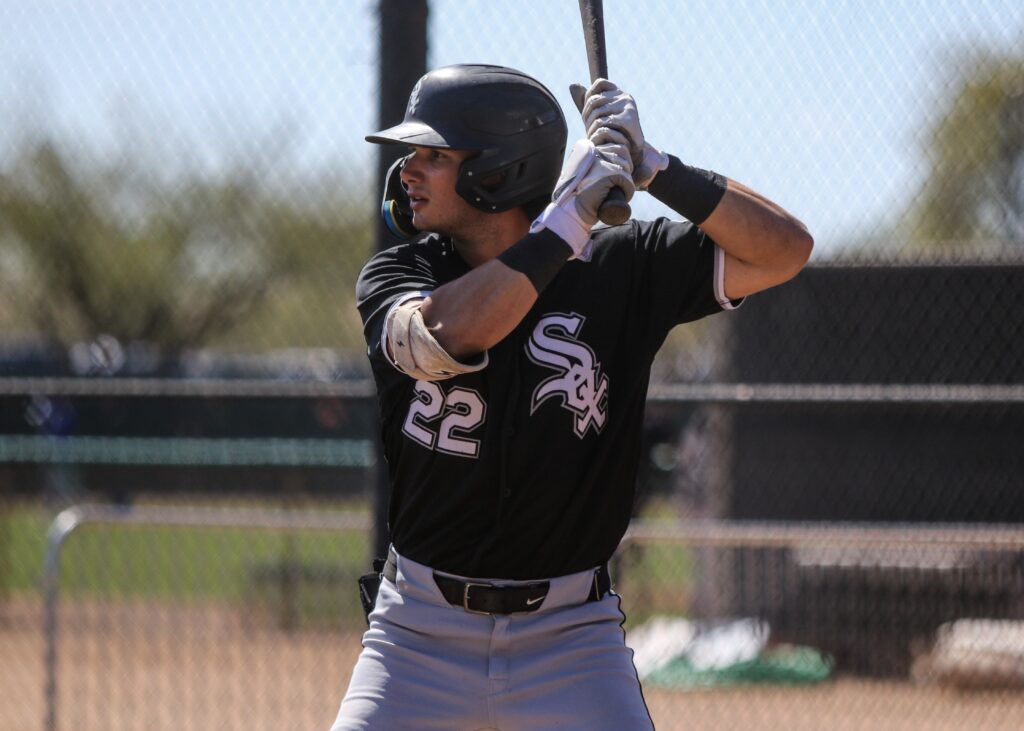
That background can matter once the board gets flat. Savion Sims, Beau Peterson, Ethan Bass, Sean Dunlap, Jack Brenner, Tyler Putnam, Jack Slightom, Gavin Swartz, Landon Thome and Dominic Santarelli all fit somewhere in that broader group. Chicago should have more history with those players than most.
The Area Code connection should help explain the board. The White Sox will not force a pick because they know a player well, but familiarity can matter when similar options are grouped together from 41 to 105.