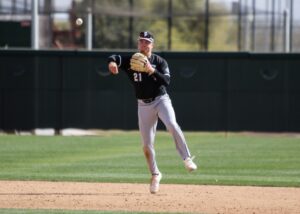
2026 White Sox Affiliate Preview: Kannapolis Cannon Ballers (Single-A)
Another important year of White Sox player development begins in Kannapolis, where a new group of young talent will take its first crack at full-season ball.
The Cannon Ballers are once again set to feature some of the more intriguing names in the system, with recent draft picks and young international talent pushing for early traction. For many players on this roster, Kannapolis is the first real checkpoint in determining how quickly they can move through the system.
That made last season’s group especially telling. While the Ballers finished 64-68, the more important takeaway was how frequently the roster turned over as the season progressed.
Kannapolis sent 19 players to High-A Winston-Salem, which reinforced the affiliate’s role as a true launching point for upward movement. The lineup consistently created pressure with contact and walks while also finishing near the top of the league in stolen bases. That identity now carries into 2026 even as the personnel shifts.
Top-end talent once again moved quickly through the level. Braden Montgomery opened the year in Kannapolis but lasted just 18 games before a promotion as one of the more advanced bats in the system.
Caleb Bonemer remained longer and delivered one of the most impactful seasons in franchise history. He became the first Cannon Baller to win Carolina League MVP and later moved up after leading the league in multiple offensive categories. His season established a clear benchmark for what a true breakout campaign at this level can look like.
On the pitching side, the year revealed both upside and development needs. The staff generated swings and misses at one of the better rates in the league, but also battled inconsistency with command.
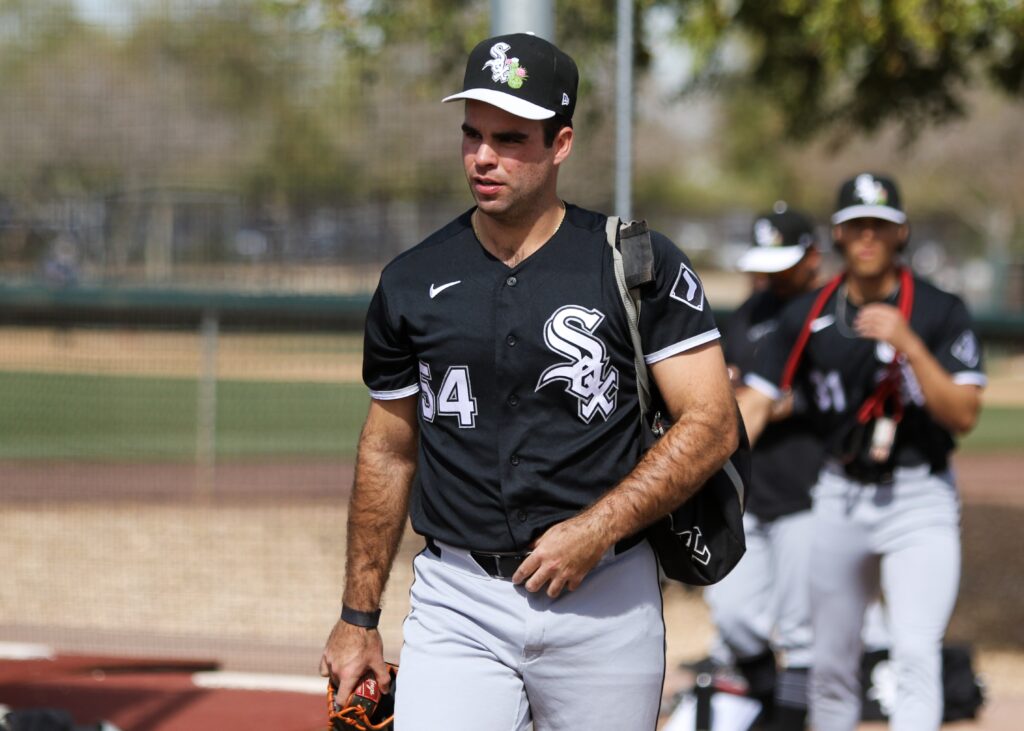
Grant Umberger emerged as one of the biggest surprises in the system and handled a full starter workload while producing one of the more reliable seasons in the rotation. His rise from a lesser-known acquisition into a key arm reflected the type of internal development the organization is aiming to build at this level. He also set the new single-season strikeout record for the Cannon Ballers last year.
There is change in the dugout as well. Chad Pinder moves up to Triple-A Charlotte after leading Kannapolis in 2025, opening the door for Jayson Nix to take over as manager. The former first-round pick and seven-year big leaguer steps into his first managerial role, bringing a player-driven perspective and edge to a young roster.
He will be supported by a mix of returning presence and new additions. Charlie Romero returns as hitting coach after helping anchor one of the Carolina League’s more productive offenses, while Rob Hardy joins as pitching coach following a strong season in the Arizona Complex League. Xavier Fernandez steps in as bench coach to begin his coaching career.
The group operates within a broader development structure led by Paul Janish, with continued direction from hitting coordinator Ryan Fuller and pitching strategist Brian Bannister, as the organization continues to align its player development systems from the ground up
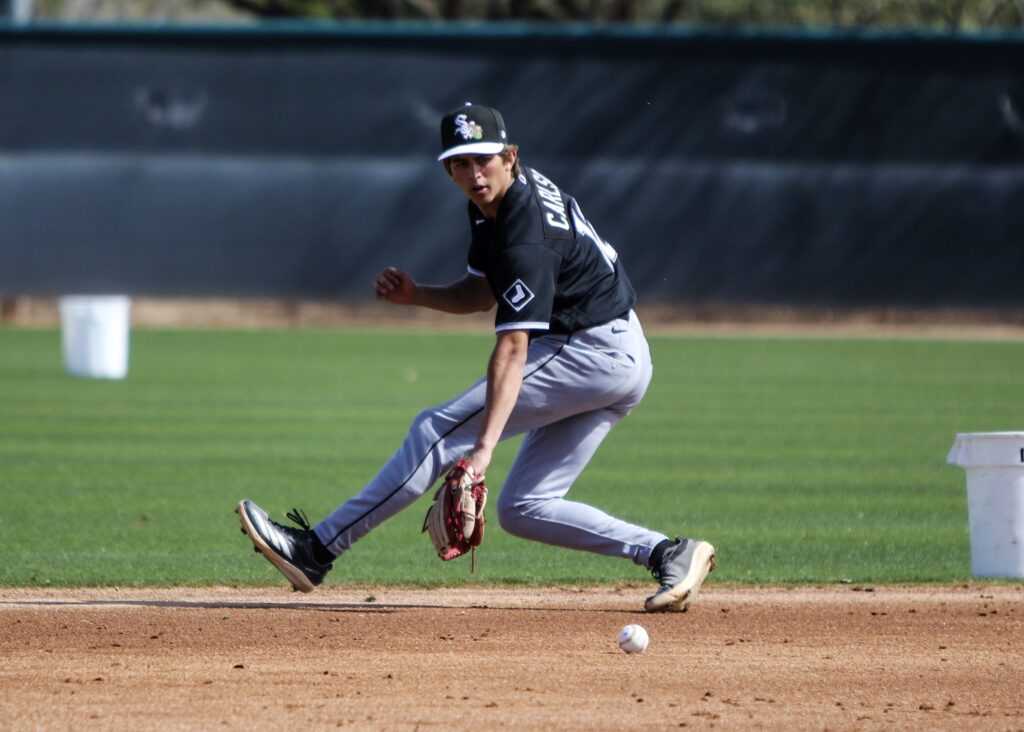
First-round pick Billy Carlson headlines the group as one of the premier defensive shortstops in the minors, while second-round pick Jaden Fauske enters his first full season with significant attention on his bat and overall athletic profile. Javier Mogollon has also generated consistent buzz dating back to minor league camp and remains one of the more intriguing young hitters in the system.
Opening Night will also feature a name tied directly to last year’s draft class. Right-hander Max Banks is expected to draw the Opening Night assignment after being selected in the 14th round out of the University of Washington.
Kannapolis opens the season on April 2 against the Hill City Howlers, with Banks set to face 2024 3rd-round pick Joey Oakie, who ranks No. 9 in the Guardians system according to MLB Pipeline.
As always at this level, the results in Kannapolis will take a backseat to progression. The focus will be on which players begin to separate themselves and force their way into the next tier of the system as the season unfolds.
Starting Pitchers
- Max Banks (22, RHP)
- Riley Eikoff (24, RHP)
- Truman Pauley (22, RHP)
- Blaine Wynk (21, RHP)
- Caedmon Parker (22, RHP)
The pitching staff once again consists of a mix of starter candidates and flexible arms expected to move in and out of roles early in the season. The focus will be on strike-throwing and turning raw stuff into consistent outings for many of these arms entering their first full season of professional baseball.
Max Banks opens the year at the front of the Cannon Ballers rotation after being selected in the 14th round out of Washington. The 6-foot-4, 225-pound right-hander brings a starter’s frame and a track record of filling up the zone.
After transferring from Chapman, Banks stepped into a larger role at Washington and earned All-Big Ten Second Team honors while regularly working deep into games. At 22, he operates with a low-90s fastball and leans on a sweeping slider as his main secondary. He has shown an ability to manage contact and keep hitters off balance.
Riley Eikhoff enters the system as a polished college arm following a strong final season at Coastal Carolina. The 5-foot-10, 185-pound right-hander handled a full starter’s workload, posting a 3.10 ERA across 90 innings with strong control.
Eikhoff works primarily with a low-90s fastball, mixing in a slider and changeup to keep hitters off balance. He is not built around overpowering stuff, but he throws strikes at a high rate and stays around the zone. His ability to sequence and adjust stood out during Coastal’s postseason run, where he was trusted in key spots.
At 24, Eikhoff is older for the level, but the profile fits a pitcher who can move on to feel and execution. He gives Kannapolis another starter capable of working innings.
Truman Pauley arrives as the secondary piece in the Luis Robert Jr. trade, but the profile carries more weight than a typical throw-in. A draft-eligible sophomore out of Harvard Baseball, he signed for $400,000, a bonus that reflected stronger interest than his 12th-round slot would suggest.
Pauley has only a limited professional track record, so the evaluation centers on pitch traits rather than results. His fastball can reach the mid-90s with carry, and the slider gives him a bat-missing element, though command remains the key variable. The White Sox identified those underlying characteristics during the draft process and targeted him accordingly as part of this return.
There will be added attention on his development throughout the season, making him a name to track closely within the return. Pauley is expected to open in Kannapolis with a focus on building innings and refining strike-throwing.
An 8th-round pick out of Ohio State, Blaine Wynk brings one of the higher-upside arms in this group after an injury-shortened junior season. The 6-foot-3 right-hander showed high-end velocity when healthy, reaching the upper 90s at the draft combine, though his spring workload remained limited.
Earlier in his college career, Wynk handled leverage innings and flashed a three-pitch mix with a fastball, changeup, and slider. The White Sox are expected to build him up as a starter.
His arm action and pitch characteristics fit what the organization targeted in this class as a supinator. If he settles into a regular role and stays on the mound, there is clear upside here as he begins his progression in Kannapolis.
Caedmon Parker gets the ball early in 2026 after being selected in the 15th round out of TCU, including a start in the FutureSox Showdown. The 6-foot-4 right-hander worked primarily as a starter in college and brings a deep mix, though his stuff has shown more impact in shorter stints.
Parker’s path to pro ball included multiple draft decisions, choosing development at TCU before ultimately signing with the White Sox, a move that reflects both patience and long-term commitment to his progression . Across his college career, he moved between roles while continuing to build experience on the mound.
The organization has tracked him for several years, dating back to his prep days, and views him as a strong athlete with room to grow. Whether he sticks in a starting role or shifts into relief, his early usage in Kannapolis will give a clearer picture of how his arsenal plays at the next level. A recent feature also detailed his path to pro ball and the development that shaped his approach heading into this season
Relief Pitchers
- Marco Barrios (19, RHP)
- Trey Cooper (23, LHP)
- Pierce George (22, RHP)
- Jeremy Gonzalez (21, LHP)
- Jackson Nove (23, LHP)
- Anthony Patterson III (24, RHP)
- Landen Payne (23, RHP)
- Ryan Schiefer (22, RHP)
- Nick Weyrich (23, RHP)
- Daniel Wright (23, RHP)
- Garrett Wright (24, RHP)
Pierce George returns to Kannapolis as the projected lead high-leverage arm to open the season after appearing on the FutureSox just missed list. A 13th-round pick out of Alabama, the 6-foot-6 right-hander took on a full-season role in 2025 and logged 47.2 innings out of the bullpen.
He struck out 52 over that span while working through stretches of inconsistency, but still found ways to navigate innings and handle late-game situations. That experience should position him for more responsibility early this year.
George is expected to take on those opportunities from the outset, with a chance to move quickly if he finds more consistency in the zone. A strong start could put him on track for Winston-Salem sooner rather than later.
Landen Payne and Nick Weyrich add two very different looks to the Kannapolis bullpen as recent 2025 draft additions. Payne, an 18th-round pick out of Southern Miss, showed well in spring with a scoreless inning and two strikeouts in the Spring Breakout game. He works with a mid-90s fastball and a tight gyro/bullet-like slider, giving him a more traditional late-inning profile.
Weyrich, selected in the 19th round out of Marshall, offers a contrast with a low release that borders on submarine. The results were uneven in that same setting, but his arm slot creates a difficult look for hitters and gives him a clear role against right-handed bats.
Ryan Schiefer joins Kannapolis after beginning his career in the Rays system, where he was selected in the 14th round of the 2024 draft out of Arizona State. The 6-foot-3 right-hander worked 19 games across multiple levels last season and now gets a fresh opportunity in a new organization.
Anthony Patterson III brings momentum from his NAIA run and will look to carry that into affiliated ball. His ability to throw strikes and handle innings gives him a path to early opportunities as he adjusts to a higher level of competition.
Trey Cooper adds another left-handed option with experience in both starting and relief roles. His background provides some flexibility in how he can be used, with the focus on improving efficiency and refining his pitch mix against professional hitters. Some more info on Patterson and Cooper here.
Jackson Nove enters after a bullpen-heavy run at Kentucky where the strikeout ability stood out. He has yet to appear in a game, but offers another look from the left side as the staff begins to sort out roles early in the season.
Daniel Wright and Garrett Wright give Kannapolis another pair of right-handed options, and no, there shouldn’t be any confusion despite the matching last names. Daniel, a 10th-round pick in 2025, brings size and a unique path to the mound, working with a low-90s fastball and a breaking ball that plays off his extension. His role early should come in shorter stints as he continues to settle into pro ball.
Garrett Wright, a 2023 draftee out of TCU, has already logged time in Kannapolis but has dealt with injuries that have slowed his progression. When on the mound, he’s shown the ability to miss some bats and handle leverage spots, and with better health, he could factor into more meaningful innings as the season develops.
Marco Barrios and Jeremy Gonzalez will both be making their affiliated debuts in Kannapolis after signing out of Venezuela. Barrios, a 19-year-old right-hander at 6-foot-3, 195 pounds, reached full-season ball late last year and will look to build on that early experience.
Gonzalez, a 21-year-old left-hander at 6-foot, 168 pounds, has spent multiple seasons developing in rookie ball and now takes the next step, giving the Cannon Ballers another left-handed look on the staff.
Infielders
- Billy Carlson (19)
- Bryce Eblin (24)
- Kaleb Freeman (23)
- Arxy Hernandez (22)
- Javier Mogollon (20)
- D’Angelo Tejada (20)
Kannapolis will feature one of the more intriguing middle infield pairings in the system, with Billy Carlson and Javier Mogollon expected to handle the majority of those innings early in the season. The combination brings two very different profiles together and gives the Cannon Ballers a clear focal point on both sides of the ball.
Carlson arrives as the 10th overall pick in the 2025 draft and has already landed on multiple Top 100 lists before appearing in an affiliated game. That early placement reflects how highly evaluators view his overall profile, with his defensive ability providing a strong foundation while the offensive side continues to evolve.
The White Sox have already begun refining his swing in an effort to unlock more consistent production, and the long-term outlook hinges on how quickly those adjustments translate into game results. If the bat reaches even a steady level, his standing within the system could rise quickly, given the value he brings at a premium position.
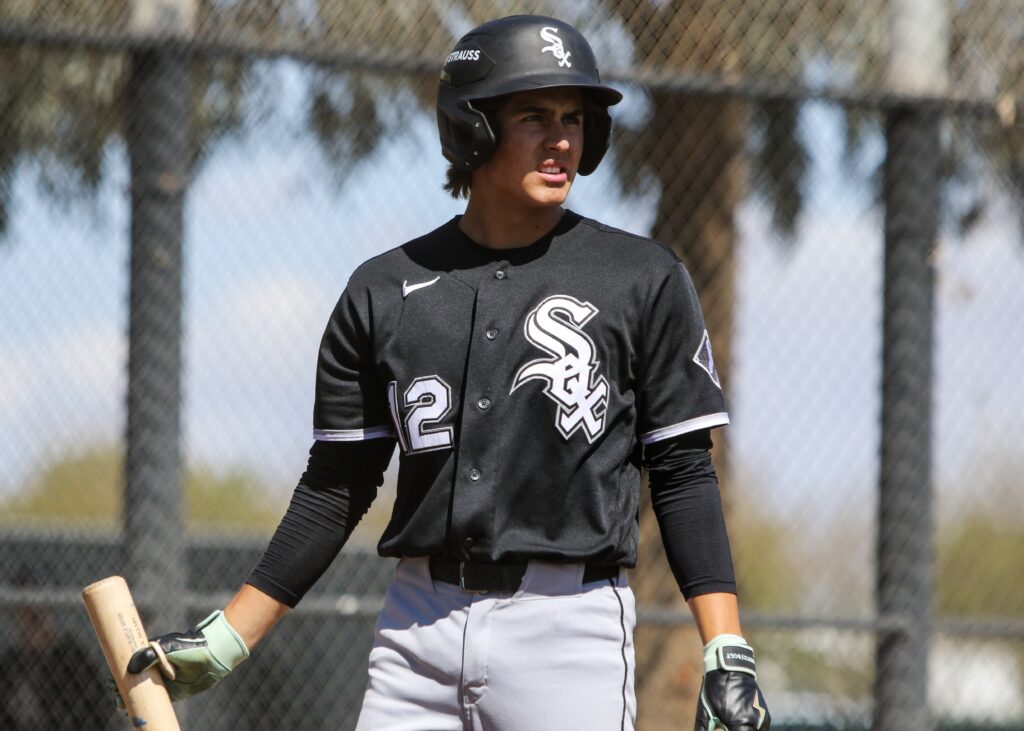
Mogollon enters the year with momentum of his own after producing at every level he has reached so far. He posted a 147 wRC+ with 10 home runs in the DSL and followed it with a 132 wRC+ in Arizona before making the jump to Kannapolis. His first full-season assignment was cut short by injury, but he still managed a 116 wRC+ with five home runs across 51 games while showing progress in trimming his strikeout rate.
That stretch, combined with the attention he drew during camp, has pushed him firmly onto the radar as one of the more interesting young bats in the organization.
For a deeper breakdown of both players, including how they stack up within the system, the recently released FutureSox Top 30 takes a deeper dive into their trajectories and overall value. On the field, they are expected to complement each other throughout the season, with Carlson holding down shortstop and Mogollon working primarily on the right side of the infield.
Together, they give Kannapolis a middle infield with a lot of protectable upside, and their development will be one of the defining storylines to follow as the season unfolds.
D’Angelo Tejada arrives in Kannapolis after two seasons in the complex leagues, where he showed steady progress at the plate. Signed for $350,000 out of the Dominican Republic in 2023, the 20-year-old began to translate his tools into more consistent production during stretches of the 2025 season.
Tejada hit .264 with a .346 OBP across 56 games while adding 13 stolen bases, and he produced multiple strong runs during the summer, where he was difficult to retire and consistently put together quality at-bats. He has seen time up the middle and at third base, where he also started during the FutureSox Showdown, and adds to his value as he moves into full-season ball.
The frame remains lean, but there is room for strength gains, and this assignment will be his first extended test against more advanced pitching as he looks to build on the progress he showed in Arizona.
Kaleb Freeman reached Kannapolis after a strong 2025 season at Georgia State, where he hit .349 with a .504 OBP and .732 slugging while setting program records in doubles and walks. The 16th round pick fits the organization’s focus on hitters with disciplined approaches and consistent contact.
He saw brief time in Low-A late in the year and showed patience right away, drawing 17 walks in 17 games. Freeman offers defensive flexibility and has continued getting reps behind the plate, which should help him find at-bats as he adjusts to full-season ball.
Arxy Hernandez returns to Kannapolis after splitting time between Low-A and Winston-Salem, still working to establish consistency at the plate. He’s logged significant time across the infield and even saw reps at first base during the FutureSox Showdown. At 23 later this season, this year will be important for him to settle into a role and earn another look at Winston-Salem.
Bryce Eblin signed with the White Sox as an undrafted free agent out of Alabama and moved quickly through the complex leagues early in his pro career. The jump to Kannapolis presented a tougher test, where more advanced pitching slowed his early momentum.
The 24-year-old has worked around the middle infield and fits as a steady depth option at the level. Finding more consistent production at the plate will be key as he looks to position himself for an opportunity in Winston-Salem.
Outfielders
- Marcelo Alcala (20)
- Nathan Archer (23)
- Jaden Fauske (19)
- Abraham Nuñez (20)
- James Taussig (23)
Fauske gives Kannapolis one of the more important bats on the roster and another key member of Chicago’s 2025 draft class to follow closely.
The local product from Nazareth Academy signed for $3 million after being selected 44th overall, and the early feedback since entering pro ball has only added to the excitement around his offensive ceiling. He was one of the more polished left-handed prep hitters in the class, and that reputation has carried over into his first full spring in the organization.
The White Sox are betting heavily on the bat. Fauske showed a strong track record of performance both in high school and on the showcase circuit, and the organization has already moved him from catcher into the outfield to keep the focus on his offensive development and athleticism. He is expected to get a long look in center field, though the profile should still play if he eventually slides to a corner.
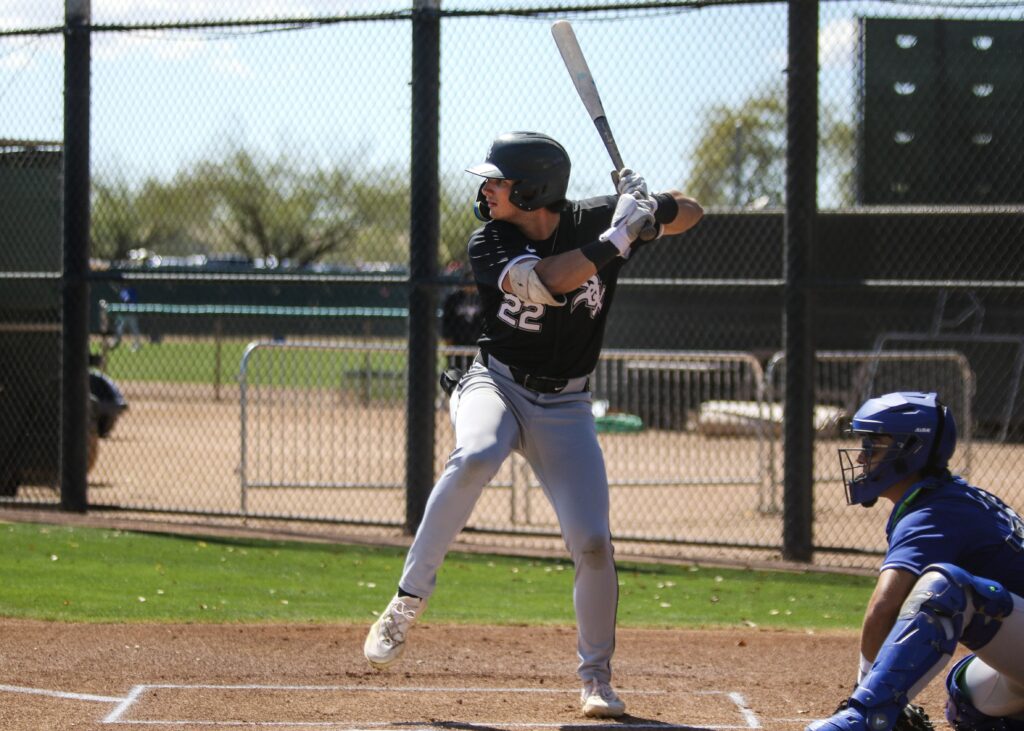
What stands out most is the quality of his approach. He controls the strike zone and has already drawn strong reviews internally for both his maturity and overall offensive feel.
That is why Fauske enters the year as one of the clearest breakout candidates on the roster.
Evaluators believe there is meaningful power coming as he continues to get stronger, and there is enough confidence in the hit tool for him to be viewed as one of the better young position players in the system. If that offensive profile clicks, he has a chance to be one of the headliners of this Kannapolis lineup and one of the bigger risers in the organization by season’s end.
Marcelo Alcala is one of the more interesting long-term outfield bets on this roster and another name that drew attention in the recent prospect cycle. Signed out of Venezuela in 2023, Alcala spent two seasons in the DSL before making his stateside debut last year, and his first run in Arizona was enough to land him on both the FutureSox Just Missed list and MLB Pipeline’s Top 30 for the organization.
The intrigue is easy to see. Alcala hit seven home runs in 42 ACL games last year and added 14 steals while seeing regular time in center field, including a start there in the FutureSox Showdown. He has now posted an OPS above .800 in each of his first three pro seasons, which keeps the offensive upside in focus as he gets his first look at full-season ball.
The question is how much contact he’ll make against better pitching. There is real impact in the bat, but the swing-and-miss has followed him into each stop and will need to come down for the rest of the profile to take off. That makes Kannapolis a meaningful test for one of the more watchable outfielders in the lower levels of the system.
Nathan Archer enters his second full season in Kannapolis after getting an initial look late in his draft year. The former Bowling Green standout and MAC Player of the Year brings a left-handed bat with athleticism and should see plenty of time in left field this season while still offering flexibility across the outfield.
A 12th-round pick in 2024, Archer showed impact at the college level with power and speed, and that profile still shapes his development path. The next step is tightening the offensive consistency, as a 32.7% K rate last year limited how often those tools translated in games.
Abraham Núñez returns to Kannapolis after a 2025 season that included multiple assignments as the roster turned over late in the year. Signed out of the Dominican Republic in 2023, he showed strong on-base ability early in his career and landed on both the preseason and midseason FutureSox just missed lists.
At the plate, Núñez introduced a more open stance and adjusted his setup, which helped him track pitches more comfortably, even as the results slipped in Low-A. Now 20, he remains young for the level and should see steady time in center field. The focus is on converting those traits into more consistent contact quality, which will shape how his role evolves this season.
With his defensive profile in center field, that development would give him a clearer path to steady playing time.
James Taussig enters 2026 after a brief but intriguing introduction late last season following his signing out of UTSA. The 6-foot-6, 230-pound left-handed hitter appeared in just six games in Kannapolis, but flashed impact with a pair of doubles and a triple while offering a different physical presence in the lineup.
A senior sign and former AAC First-Team selection, Taussig brings a track record of college production, including a .317 career average and a strong final season. At 23, he is a bit older for the level and could earn a move to Winston-Salem if the production carries over. He is expected to get an extended look this year, with opportunities at catcher and corner spots depending on usage.
Catchers
- Stiven Flores (20)
- Rylan Galvan (22)
- Boston Smith (23)
Rylan Galvan enters his first full professional season after being selected in the 13th round out of the University of Texas, where he served as the starting catcher for one of the top programs in the country. The 6-foot, 215-pound right-handed hitter brings a physical profile with real strength, translating to power that plays to all fields, and showed up in a strong junior season.
Galvan pairs that power with advanced plate discipline, working walks at a high rate, though contact remains the swing factor. There is some length in the swing, and he can be overly pull-oriented, leading to swing-and-miss, particularly against secondary pitches.
Defensively, he has taken steps forward behind the plate, with solid arm strength, quick exchanges, and improving receiving skills. The White Sox value his toughness and leadership, and he fits the mold of a college catcher who could move quickly, with a path to Kannapolis early and the potential to reach Winston-Salem.
Boston Smith joins the organization after a late spring trade with Washington, bringing one of the more productive power bats in college baseball from the 2025 class. A sixth-round pick out of Wright State, the 5-foot-10, 195-pound catcher/outfielder broke out in a major way during his final season, launching 26 home runs while posting a dominant offensive line and showing consistent extra-base impact.
Smith’s profile is built around strength and damage at the plate, with the ability to drive the ball in the air and produce across a full season. He pairs that with solid on-base traits, drawing walks at a high clip, though his game is centered on power output. Defensively, he offers versatility with experience behind the plate and in the outfield, which could help create multiple paths to at-bats early in his pro career.
At 23 and coming off that level of production, Smith is a bat-first addition who could move quickly if the power translates. He adds another offense-focused option to the system and will be a name to watch as he begins his first full season in the organization, given that he was traded for.
Stiven Flores heads to Kannapolis for his first full-season test after spending the past two years in Arizona. Signed out of Venezuela in 2023, he turned heads early with a 143 wRC+ in the DSL, showing an advanced feel for the barrel at just 17.
The 5-foot-11, 180-pound catcher carried that approach into the ACL, where he put together productive stretches in 2025 despite uneven overall results. He controls the zone well and limits swing-and-miss, but will need to drive the ball with more authority as he faces a jump in competition.
Defensively, Flores has taken steps forward with his receiving and general consistency behind the plate. His throwing remains a point of emphasis, though the overall progress has helped keep him in the mix at catcher. At 20, this season will be about translating his feel to hit into a more complete offensive profile as he looks to settle into a role.