What Could a White Sox Amateur Scouting Restructure Look Like?

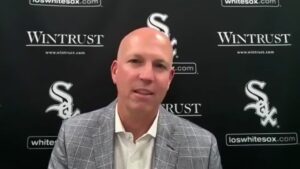
Mike Shirley via White Sox Zoom
The White Sox could have named an interim amateur scouting director after Mike Shirley resigned on Sept. 12. Garrett Guest already held the assistant director title, and the organization had followed a similar internal succession model during its previous two changes atop the department.
Chris Getz chose not to.
Instead, the White Sox are reviewing how they want the operation to function before determining who should run it. Getz told reporters that no interim director would be named and left open the possibility of an outside hire. He also said the club is reviewing its entire player evaluation process.
“Once that’s mapped out, we’ll figure out what the needs are for the organization,” Getz told reporters.
That approach makes Shirley’s opening different from the previous scouting transitions in Chicago. The eventual hire will matter, but so will the structure surrounding that person.

Shirley resigned while on administrative leave during an internal investigation. The White Sox have described his departure as a personnel matter and have not disclosed the findings of that investigation. His exit also came only two months after he oversaw the selection of Roch Cholowsky with the first overall pick in the 2026 draft.
James Fegan of the Chicago Sun-Times reported that Shirley and Guest had remained the department’s leadership pair even as much of baseball operations changed around them. Getz has since indicated that changes to the scouting process were being considered before Shirley’s ouster.
A Different Kind of Succession for White Sox
The White Sox have a recent history of promoting from within when the amateur scouting director changes.
Nick Hostetler moved from assistant scouting director to director in 2015 when Doug Laumann became a senior adviser. Four years later, Hostetler shifted into a special assistant role. Contemporary reporting identified Shirley and Guest, then assistant scouting directors, as possible replacements. Shirley ultimately received the job.
Guest remained involved in draft preparation after Shirley’s promotion. Seven years later, the White Sox staff directory lists him as assistant director of amateur scouting with no director currently listed above him.
That would make Guest the easiest person to elevate if Chicago wanted to preserve the existing structure. Getz’s decision against an interim appointment suggests the organization does not want that structure to determine what happens next.
Fegan reported that Getz had already been examining different ways of operating on the scouting side. Rather than immediately filling Shirley’s position, the White Sox are first determining what roles they need within a larger evaluation process.
The organization already has a model for that type of change.
Player Acquisition Has Already Changed
The White Sox are in their second season with a department of acquisition led by Matt Grabowski.
Fegan reported earlier this month that professional scouting, international scouting, player development and specialized groups such as biomechanics and training had previously struggled to align. The acquisition department was created to bring those voices into a more coordinated process when Chicago adds a player.
Assistant general manager Josh Barfield described acquisition as a hub with other parts of the organization operating as spokes. Professional scouting already functions within that model. On the amateur side, Fegan described a process that works in the opposite direction, with scouts bringing players forward for statistical review.
The 2026 draft showed how many people now touch an amateur decision. FutureSox reported that members of hitting, pitching, player development, sports performance and acquisition were among the front-office personnel involved in the process around the organization’s record draft pool. Multiple scouts also told FutureSox they felt more aligned as a staff under Getz.
That does not establish that amateur scouting will become another formal spoke of acquisition. Getz has not announced such a move.
It does provide an existing framework for one.
If the White Sox move amateur scouting closer to the acquisition department, they would not necessarily need to eliminate the traditional director position. A scouting director could still manage the national staff, crosschecks and draft preparation while the broader acquisition group connects those evaluations to data and the organization’s plans for player development.
Grabowski’s career makes him especially relevant to that possibility.
Why Matt Grabowski Matters
Grabowski does not need to replace Shirley for his role in amateur scouting to grow.
His current title is director of acquisition, but his background checks several parts of the evaluation process Getz is reviewing.
Before joining Arizona and eventually Chicago, Grabowski spent several years in the Braves organization. By 2018, he was Atlanta’s assistant director of scouting and analytics. The Braves’ media guide said he oversaw the professional scouting department while continuing to take scouting assignments himself. His work also included integrating scouting information with statistical analysis.
Atlanta moved him to assistant director of amateur scouting operations in January 2019. His responsibilities included draft operations, amateur evaluation, scouting assignments and strategic planning.
He later became Arizona’s assistant director of player development while Barfield ran that department. Both eventually joined the White Sox after the Diamondbacks’ 2023 National League championship season.
The progression is relevant to Chicago’s current decision. Grabowski has worked in professional scouting, amateur scouting operations, player development and now acquisition.
There is no public reporting that the White Sox plan to place the next amateur scouting director beneath Grabowski. There is also no indication that Grabowski is being considered for Shirley’s former title.
A different possibility fits his résumé better. If Getz expands the acquisition model, Grabowski could remain in his current position while serving as a connection between professional and amateur evaluation. The eventual amateur director could then concentrate more directly on running the scouting staff and preparing for the draft.
That would make the identity of that director a separate question from who coordinates the larger process.
The Internal Scouting Options
Joe Doyle of Over-Slot highlighted three logical internal names after Shirley’s departure: longtime evaluator J.J. Lally, East Coast crosschecker Steffan Segui and Guest.
None has been publicly confirmed as an interview candidate. Their cases come from their existing roles and track records rather than a reported White Sox shortlist.
Lally has some of the most visible recent scouting wins in the organization. The White Sox credited him as the recommending scout for Noah Schultz in 2022 and George Wolkow the following year. He held the same distinction for 2025 second-round pick Jaden Fauske.
His work also illustrates what the White Sox would be preserving by keeping a longtime evaluator near the top of the department. Fegan spent a day with Lally on the amateur circuit in 2024, documenting the early evaluation work that begins well before a player enters serious draft consideration. Lally’s history with Schultz and Wolkow also grew through the White Sox’s Area Code program and relationships with their families.
Segui provides another scouting-focused option. Shirley credited him and Florida area scout Alan Marr with following Blake Larson after the left-hander moved from Iowa to IMG Academy. Shirley later said Segui was particularly high on Anthony DePino, whom the White Sox selected in the 2025 draft.
Guest’s case is different. He already occupies the assistant director position and has experience near the top of the department. He was also identified as a possible successor the last time the job opened before Shirley received the promotion in 2019.
Those three options do not have to represent a return to the old structure.
If Getz wants the amateur director to focus heavily on evaluation and managing scouts while acquisition handles more of the cross-department coordination, an internal evaluator could take on a different version of the job Shirley held.
The decision not to appoint an interim gives the White Sox time to determine whether that is what they want.
An Outside Hire Could Look Different
Getz has also left the door open to bringing in someone from another organization.
That search could take several forms. Chicago could hire another club’s assistant director or crosschecker into a director position. It could pursue an experienced scouting head if one becomes available. A broader reorganization could also create a job attractive to someone whose résumé extends beyond amateur scouting.
Matt Blood is one example of the latter, although there has been no public reporting connecting him to the White Sox.
Baltimore parted ways with Blood on Sept. 10. He most recently served as vice president of player and staff development after previously overseeing both player development and domestic scouting. Blood also supervised the Orioles’ 2024 and 2025 drafts before Will Robertson took over those responsibilities this season.
That background would fit the type of cross-department experience Chicago has increasingly valued. It does not make Blood a White Sox candidate without further reporting.
The outside market could also change over the next several months. Doyle noted that labor uncertainty may affect scouting directors with expiring contracts, potentially making experienced evaluators available who would normally be difficult to hire away for a lateral position.
The current collective bargaining agreement expires Dec. 1. That date is certain. A lockout or other work stoppage is not, and any effect on individual scouting contracts would depend on how clubs handle their own personnel decisions.
For the White Sox, the larger point is timing. Getz has already decided against filling the position temporarily. If the club believes the outside market could improve later in the offseason, there is little reason to rush into a permanent hire before deciding how the department will be organized.
The Structure Comes First
The White Sox do not have to choose between traditional scouting and the acquisition model they have spent the last two seasons building.
Their recent draft process already uses both.
Area scouts and crosscheckers remain responsible for identifying players and building relationships that cannot be recreated by a model. Other departments can add information about how a player might develop after entering professional baseball. Acquisition gives those groups a place to connect before a decision is made.
What could change is where amateur scouting sits within that process.
An internal promotion could preserve institutional knowledge while placing the director inside a broader acquisition structure. An outside hire could bring a different evaluation background into the same system. Grabowski could gain more influence over the connection between amateur and professional scouting without ever assuming Shirley’s old title.
Those possibilities remain analysis. The White Sox have not publicly committed to any of them.
What Getz has established is the order in which he wants to make the decision. Chicago is determining what it wants the scouting operation to look like before deciding what positions it needs.
The eventual hire will tell us who leads the amateur scouting department. The reporting line around that hire could reveal more about where the department is headed.
That is the larger decision facing the White Sox after Shirley’s departure. They have an opening at the top of amateur scouting, but Getz is first deciding what that opening should become.